

Imagine a transportation machine with more than 1,000 wheels, capable of moving cargo weighing hundreds or even thousands of tons.
It sounds incredible, but this type of heavy transportation equipment is already a reality in China.
Known as a Self-Propelled Modular Transporter (SPMT), this specialized system is designed for loads that are far beyond the practical capacity of ordinary road-going trucks.

Table of Contents
1000+ Wheel Transporter: The Technology Behind Heavy Transportation
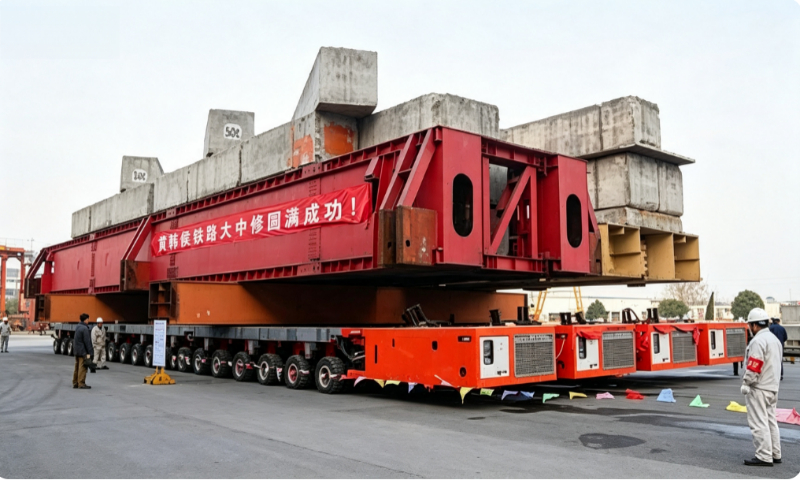
The impressive capability of a 1000+ Wheel Transporter comes mainly from its modular design.
Instead of using a single conventional truck chassis, an SPMT combines multiple modular axle lines. The number of axle lines can be configured according to the cargo weight, dimensions, and transportation requirements.
Several key technologies make this possible:
- Modular Axle Configuration
Multiple axle lines can be connected to distribute the cargo load across a large number of wheels.
This modular structure allows engineers to configure the transporter for different heavy-haul projects rather than relying on one fixed vehicle configuration.
- Hydraulic Suspension
Hydraulic suspension helps distribute the load between axle lines and maintain stability when transporting massive structures.
It is particularly important when the transporter operates on uneven surfaces or when the cargo has an irregular weight distribution.
- Hydraulic Steering
Independent hydraulic steering allows multiple axle lines to work together.
This gives an SPMT excellent maneuverability at low speeds, which is essential when moving oversized equipment through industrial facilities, construction sites, power plants, and other restricted areas.
- Centralized Control
The steering, driving, suspension, and other functions can be coordinated through a centralized control system.
This enables operators to make precise adjustments during complex heavy-lift transportation operations.
What Can a 1,000+ Wheel Transporter Carry?
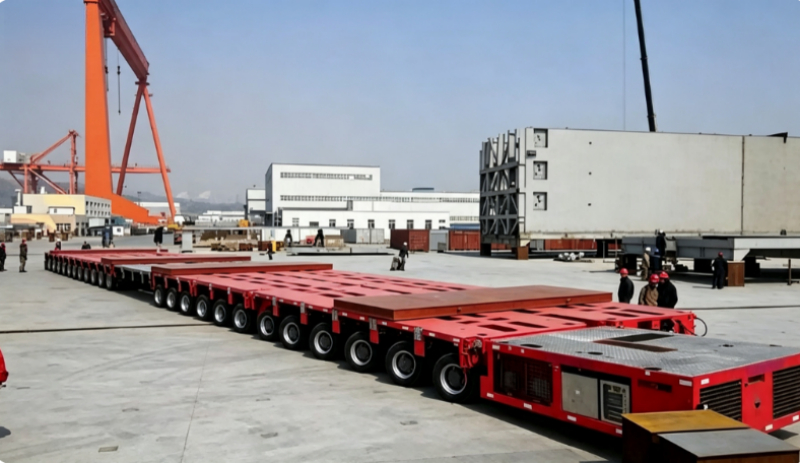
A 1000+ Wheel Transporter is designed for specialized projects where cargo weight and dimensions exceed the practical limits of conventional commercial vehicles.
Typical applications include:
1. Power and Energy
SPMTs can transport:
- Large power transformers
- Turbine components
- Generators
- Power generation equipment
- Heavy industrial machinery
2. Petrochemical Projects
Large reactors, pressure vessels, storage equipment, and prefabricated process modules may require specialized heavy-haul transportation.
3. Construction and Infrastructure
SPMT systems can also be used to move:
- Large bridge sections
- Steel structures
- Tunnel components
- Heavy construction equipment
- Oversized prefabricated structures
4. Shipbuilding and Industrial Facilities
Shipyards and large industrial plants may use modular transporters to move massive structures and equipment within controlled working environments.
These applications demonstrate where an SPMT provides a clear advantage: when the cargo is simply too heavy, too large, or too difficult to maneuver with ordinary commercial vehicles.
SPMT vs. Standard Flatbed Truck: Which Is Right for You?
This is an important question for international buyers.
An SPMT is a highly specialized engineering system for exceptional heavy-haul projects. It offers enormous load capacity and advanced maneuverability, but it also requires specialized operators, detailed project planning, and significant investment.
A standard flatbed truck, on the other hand, is designed for regular road transportation and can serve a much wider range of daily logistics requirements.
| Feature | SPMT | Standard Flatbed Truck |
| Main Purpose | Specialized heavy-haul projects | Daily road transportation |
| Typical Cargo | Extremely heavy or oversized structures | Machinery, steel, materials, equipment, vehicles |
| Structure | Modular axle lines | Truck chassis with flatbed platform |
| Steering | Multi-axle hydraulic steering | Conventional steering system |
| Operation | Specialized engineering operations | Regular road operations |
| Investment | High | More economical |
| Road Mobility | Mainly project/site operations | Suitable for general road transportation |
| Best For | Power plants, petrochemical projects, bridges | Construction, manufacturing, logistics, project cargo |
The key point is simple:
The most powerful transportation equipment is not always the most suitable transportation equipment.
If your cargo consists of steel products, construction machinery, prefabricated components, pipes, equipment, or other regular project cargo, a high-capacity flatbed truck may offer a much better balance between cost, flexibility, payload, and daily usability.
When Is a Flatbed Truck the Better Choice?
For many project logistics operations, transportation frequency and road mobility are just as important as maximum payload.
A flatbed truck can travel on public roads, serve different job sites, and handle a variety of cargo without the complex setup required by an SPMT.
Typical applications include:
1. Construction and Infrastructure
Flatbed trucks can transport:
- Steel structures
- Construction materials
- Excavators and machinery
- Prefabricated components
- Pipes
- Building materials
2. Manufacturing and Industrial Logistics
Factories and industrial companies often need to move machinery, equipment, steel products, and production components between warehouses, factories, and project sites.
A customized flatbed platform can be designed according to the cargo dimensions and loading requirements.
3. General Project Cargo
For medium- and heavy-duty cargo that does not require an SPMT, a flatbed truck can provide a practical combination of payload capacity, road mobility, loading convenience, and operating efficiency.
Depending on the application, buyers can select configurations such as 4×2, 6×4, and 8×4, along with different wheelbases, platform dimensions, chassis brands, engine specifications, and payload capacities.
Why Has China Become a Major Heavy Transportation Equipment Manufacturer?
The development of advanced SPMT systems is part of China’s broader heavy equipment manufacturing capabilities.
China has developed a comprehensive industrial supply chain covering commercial vehicle chassis, special-purpose vehicles, hydraulic systems, engineering machinery, and customized transportation equipment.
This manufacturing ecosystem allows Chinese manufacturers to provide solutions ranging from standard road-going trucks to specialized heavy-haul systems.
For international buyers, this manufacturing capability also makes it possible to customize vehicles according to:
- Cargo requirements
- Local road conditions
- Payload requirements
- Chassis preferences
- Emission standards
- Wheel configuration
- Platform dimensions
- Loading requirements
The result is a wide range of transportation solutions for different industries and operating environments.
Chengli Automobile: Practical Flatbed Truck Solutions
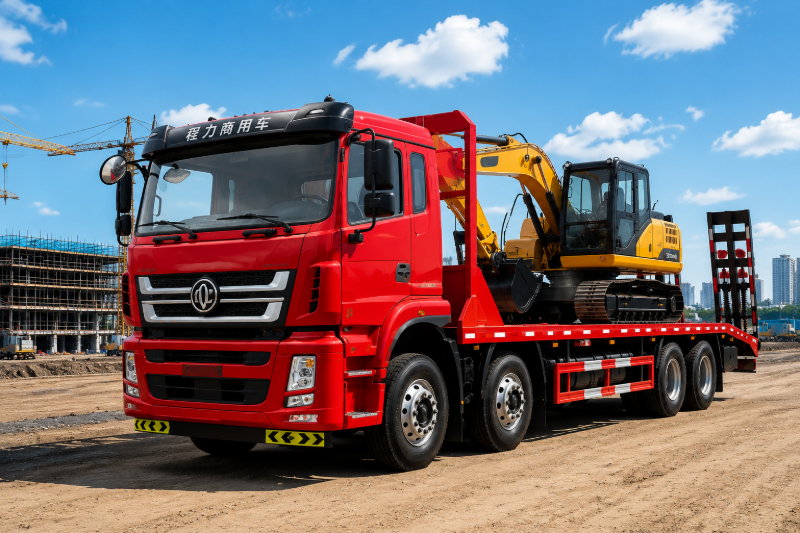
Not every heavy transportation project requires a 1000+ Wheel Transporter.
For customers who need a practical road-going vehicle for construction, industrial logistics, machinery transportation, or project cargo, Chengli Automobile provides standard and customized flatbed truck solutions.
Our flatbed trucks can be configured according to the actual transportation requirements, including:
- Cargo type and dimensions
- Required payload
- Chassis brand
- Drive configuration
- Wheelbase
- Flatbed platform dimensions
- Local road conditions
- Emission requirements
- Loading and unloading requirements
For example, customers can choose a 4×2 flatbed truck for general transportation, a 6×4 heavy-duty flatbed truck for demanding construction applications, or an 8×4 high-capacity flatbed truck for heavier project cargo.
Instead of simply choosing the largest vehicle available, the better approach is to match the vehicle configuration to the actual cargo and working conditions.
Why Choose Chengli Flatbed Trucks?
| Advantage | Chengli Solution |
| Manufacturing Capability | Professional commercial and special vehicle production |
| Customization | Configurations tailored to customer requirements |
| Chassis Options | Multiple chassis brands and drive configurations |
| Applications | Construction, industrial logistics, machinery and project cargo |
| Quality Control | Production and inspection processes |
| Export Support | Transportation solutions for international markets |
The goal is not simply to provide the biggest truck.
The goal is to provide the right truck for the job.
An SPMT may be the ideal solution for moving a massive transformer, bridge section, or industrial module. But for regular project logistics, a well-configured flatbed truck can provide better practicality, lower investment, and greater flexibility for daily transportation.
Conclusion
From a 1,000+ Wheel Transporter to a conventional heavy-duty flatbed truck, modern transportation technology provides solutions for very different cargo requirements.
SPMTs demonstrate the impressive capabilities of modular engineering, hydraulic suspension, and multi-axle steering. They make it possible to move loads that ordinary commercial vehicles cannot handle efficiently.
However, maximum capacity is not always the priority.
For many construction, manufacturing, and project logistics applications, a standard or customized flatbed truck can provide a more practical solution for everyday transportation.
The right choice depends on several factors, including cargo weight, cargo dimensions, road conditions, transportation frequency, loading requirements, and project budget.
In heavy transportation, the best solution is not necessarily the one with the most wheels.
It is the one that matches the job.
Need the Right Flatbed Truck for Your Project?
Whether you need a standard flatbed truck or a customized heavy-duty transportation solution, Chengli Automobile can help you select a suitable configuration based on your cargo and operating requirements.
Contact us for detailed specifications, technical support, and a customized quotation.
