

Are you about to procure city buses for your urban transit fleet? Many operators end up with unexpected losses due to wrong specifications — registration rejection, soaring operational costs, and frequent vehicle downtime caused by poor road adaptability.
Your city‑bus selection directly impacts passenger experience, total fleet expenditure, route continuity and local regulatory compliance. Making informed decisions at the procurement stage prevents expensive later‑stage fixes.
Read this buying guide for critical selection criteria including legal passenger capacity, powertrain solutions, GVW & axle‑load limits, interior configuration, tough‑condition performance and global after‑sales support. Both new‑fleet construction and vehicle‑renewal projects will benefit from these practical tips to avoid common purchasing pitfalls.

Table of Contents
What Is The Most Important Feature of a City Bus?
A modern city passenger bus usually focuses on several important areas:
- High passenger capacity
- Easy passenger boarding and exit
- Comfortable seating and standing space
- Efficient operation on urban routes
- Reliable performance in daily service
- Practical maintenance and service access
Depending on the transportation system, operators can choose diesel, CNG, hybrid, or electric city buses.
What is the Difference between a diesel city bus and an electric city bus?
Both diesel and electric city buses can serve urban transportation needs, but they have different operating characteristics.
| Item | Diesel City Bus | Electric City Bus |
|---|---|---|
| Core strengths | Mature engine, long range, quick refueling | Zero‑emission, low noise, low energy cost |
| Best‑fit scenarios | Routes without charging facilities, long continuous shifts | Fixed short‑medium urban commuter routes |
| Main concerns | Higher exhaust emissions & fuel cost | Battery range limits, need charging infrastructure |
Diesel Bus
Diesel buses are often selected because they offer:
- Established engine technology
- Long operating range
- Fast refueling
- Flexible route deployment
- Mature maintenance networks
They can be practical for routes where charging infrastructure is limited or where buses need to operate continuously over long distances.
Electric Bus
Electric buses are increasingly used in urban public transportation.
Their main advantages include:
- Zero tailpipe emissions
- Low noise during operation
- Potentially lower energy costs
- Reduced local air pollution
- Good suitability for fixed urban routes
However, operators should also consider charging infrastructure, battery capacity, route distance, climate conditions, and charging schedules before choosing an electric model.
Diesel or Electric? A Practical Guide for Transit Operators
Selecting the right one should start with the actual operating requirements rather than simply choosing the largest or most powerful model.
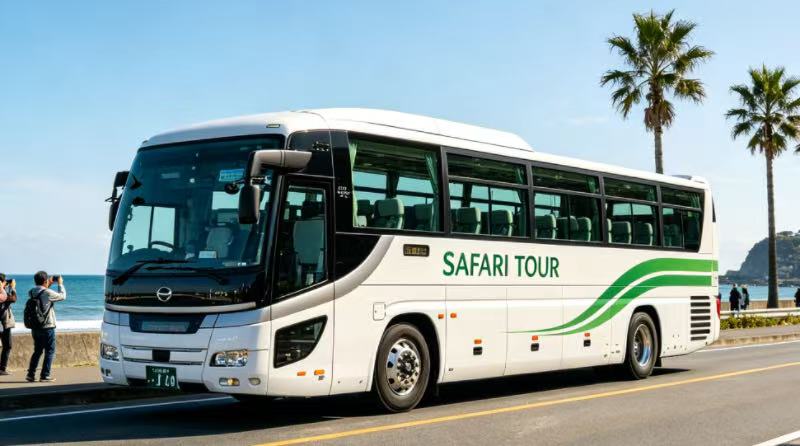
1. Consider Passenger Capacity
Passenger capacity — Typically ranges from 19 seats for a 7m midi bus to 60+ seats for a 12m articulated city bus. Always match seat count to the chassis GVW and legal payload limit (e.g., a 7,955 kg GVW bus with 6,200 kg curb weight allows only ~23 passengers at 75 kg/person).
Passenger demand is one of the most important factors when selecting an urban public transport bus. A smaller bus may be suitable for low-demand routes, residential areas, or narrow city streets. A larger city bus can provide greater capacity for busy routes with heavy passenger demand.
When evaluating capacity, consider:
- Number of passengers per trip
- Peak-hour passenger volume
- Average route length
- Frequency of stops
- Available road space
- Expected standing passenger capacity
Choosing an appropriate capacity helps avoid unnecessary operating costs while maintaining efficient passenger transportation.
2. Choose the Right Powertrain
Powertrain options — Diesel remains the most common for emerging markets (Euro III–V emission levels), while electric city buses suit fixed urban routes with daily mileage under 200 km and available charging infrastructure. CNG/hybrid options work in regions with stable gas supply.
The powertrain has a major influence on operating costs and environmental performance.
Traditional diesel city buses remain widely used because of their established technology, strong range, and convenient refueling. However, electric city buses are becoming increasingly attractive for urban transportation because they can reduce local exhaust emissions and provide quiet operation.
For routes with suitable charging infrastructure, an electric city bus can be an effective option for daily public transportation.
When comparing different powertrains, operators should evaluate:
- Energy consumption
- Driving range
- Charging or refueling infrastructure
- Maintenance requirements,
- Route conditions, and total operating costs
3. Focus on Passenger Comfort
Interior design — High-density downtown routes use 2–3 passenger doors, wide aisles (≥650 mm), and mixed standing-seating layouts. Low-floor chassis with wheelchair ramps are required for accessibility-compliant public transport projects.
A bus may operate for many hours every day, so passenger comfort is an important part of the overall transportation experience.
Important interior features can include:
- Ergonomic passenger seats
- Sufficient standing space
- Air conditioning
- Wide passenger doors
- Easy-to-use handrails
- Good interior lighting
- Low-entry or low-floor design where required
For high-frequency urban routes, fast boarding and convenient passenger movement can also help reduce the time a bus spends at each stop.
4. Consider Urban Road Conditions
Not every city has the same road environment— For mountainous regions (gradients above 8%), specify reinforced suspension, hill-start assist and high-torque engines (≥200 N·m per ton GVW). Hot-climate markets (above 40°C) need upgraded cooling systems; cold regions (below -10°C) require engine pre-heaters and battery thermal management for EVs.
Before purchasing a city bus, operators should consider road width, traffic density, turning radius, road grades, climate, and route conditions.
For example, a compact bus may be more suitable for narrow urban streets, while a larger passenger bus may provide better capacity on major routes.
The right vehicle should match the actual road conditions instead of focusing only on passenger capacity or vehicle size.
Why Vehicle Configuration Matters?
There is no single city bus configuration that is suitable for every market. For mountainous regions (gradients above 8%), specify reinforced suspension, hill-start assist and high-torque engines (≥200 N·m per ton GVW). Hot-climate markets (above 40°C) need upgraded cooling systems; cold regions (below -10°C) require engine pre-heaters and battery thermal management for EVs.
Fleet buyers should compare:
Passenger capacity + vehicle dimensions + powertrain + route conditions + climate + infrastructure + maintenance support
This approach helps operators select a vehicle based on actual operating requirements rather than price alone.
For example, an urban fleet operating short and fixed routes may benefit from electric buses, while a fleet covering longer routes without convenient charging facilities may prefer diesel models.
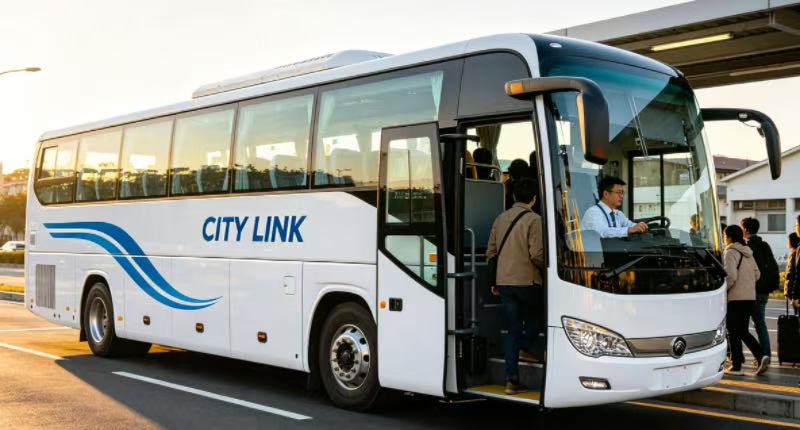
Important Features for Urban Public Transport
A reliable bus should be designed around the needs of both passengers and operators.
1. Passenger-Oriented Design
The interior should provide a balance between seating and standing capacity. Wide doors and practical interior layouts can improve passenger flow during busy periods.
2. Operator-Oriented Design
For fleet operators, reliability and maintenance are equally important. Easy access to service components can reduce maintenance time and help keep buses in operation.
3. Safety and Daily Operation
A city passenger bus should also provide appropriate safety systems and visibility for drivers and passengers. The specific configuration should match local regulations and transportation requirements.
Conclusion
Choosing the right city bus is an important decision for any public transportation operator. The best vehicle is not necessarily the largest or most expensive model. It is the one that matches the route, passenger demand, infrastructure, operating environment, and long-term fleet strategy.
By evaluating passenger capacity, powertrain, comfort, road conditions, and maintenance requirements together, operators can build a more efficient and reliable urban transportation fleet.
Let’s find the right city bus for your project. Reach out now for a consultation on your operational requirements and fleet configuration.
Frequently Asked Questions
Is an electric city bus suitable for urban routes?
Yes. An electric city bus can be suitable for fixed urban routes, especially when charging infrastructure and route planning can support the required daily operating range.
Is it possible to fit accessibility features such as wheelchair ramps on city buses?
Yes. Low‑floor chassis, wheelchair ramps and priority‑passenger zones are available options, to meet local public‑transport accessibility regulations.
What should I consider before buying a city bus?
Key factors include passenger capacity, powertrain, vehicle dimensions, road conditions, passenger comfort, energy consumption, maintenance requirements, and local regulations.
What factors drive the price difference between different city bus models?
Price gaps come from chassis grade, powertrain type, passenger capacity, interior customizations, certification packages and optional auxiliary equipment. We can work out cost‑effective configurations aligned with your project budget.
