

Hydraulic towing systems have changed the way heavy vehicles are recovered. When a truck breaks down on a highway or a loaded commercial vehicle is damaged in an accident, the recovery team needs more than a powerful engine. The recovery unit must lift the vehicle safely, control the load, and keep the truck stable throughout the operation.
For fleet operators and roadside recovery companies, the wrong equipment can mean longer recovery times, higher labor costs, and unnecessary damage to the disabled vehicle. This article looks at how hydraulic recovery equipment works, where it performs best, and what operators should check before investing in a heavy recovery vehicle.
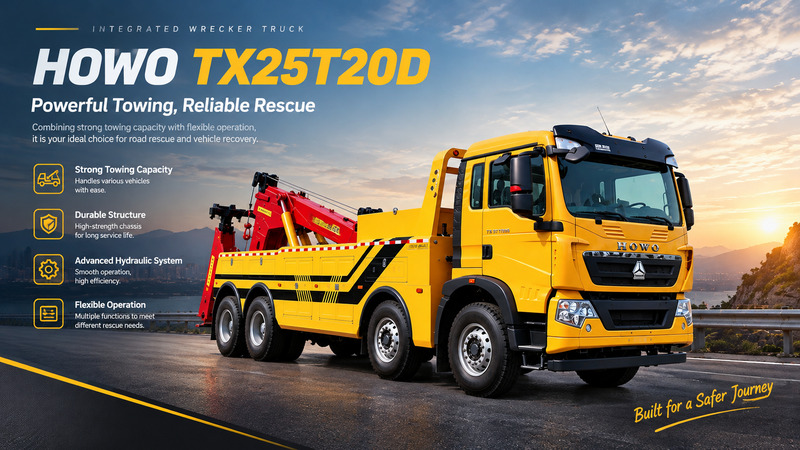
Table of Contents
How Does a Hydraulic Towing System Work?
A modern hydraulic towing system transfers power from the truck engine through a PTO and hydraulic pump to cylinders, valves, winches, and lifting mechanisms. In a properly designed Hydraulic Towing System, these components work together to provide controlled lifting, pulling, and towing functions.
The basic working sequence is straightforward:
Engine → PTO → Hydraulic Pump → Control Valves → Hydraulic Cylinders / Winch → Recovery Equipment
When the operator activates a hydraulic function, pressurized fluid moves through the control valve to the relevant cylinder or motor. The cylinder then raises, lowers, extends, or retracts the recovery mechanism.
This arrangement gives the operator much better control than a simple mechanical lifting arrangement. It also allows several functions to be integrated into one recovery vehicle.
For heavy-duty work, however, hydraulic power alone is not enough. Pump flow, working pressure, cylinder size, structural strength, and load distribution all affect actual recovery performance.
Hydraulic vs. Mechanical Recovery Equipment
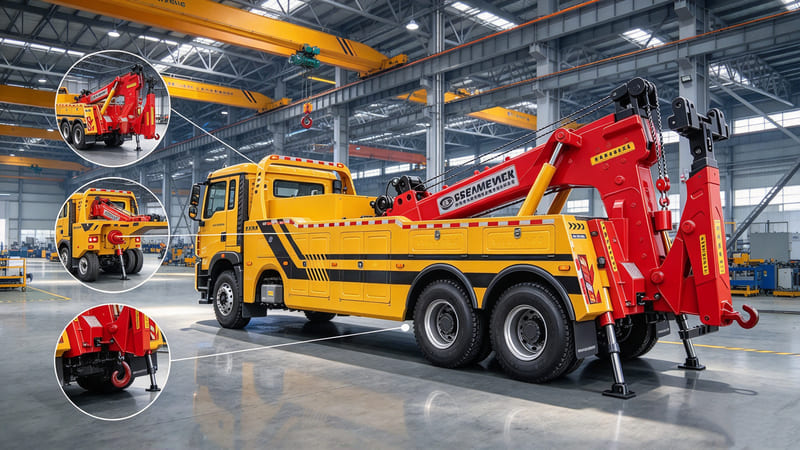
The difference becomes clearer when recovery work involves a heavy commercial vehicle. A Hydraulic Towing System is especially useful when the operator needs controlled movement during lifting, pulling, and vehicle positioning.
Mechanical recovery equipment relies mainly on gears, levers, cables, and mechanical lifting structures. It can be durable and relatively simple, but adjustment is less flexible during complex recovery operations.
Hydraulic equipment uses fluid pressure to generate controlled movement. This makes it particularly useful when the operator needs to:
- Lift one axle of a disabled truck
- Position a damaged vehicle precisely
- Adjust the recovery arm during towing
- Pull a vehicle with a hydraulic winch
- Stabilize the recovery vehicle before lifting
A mechanical system still has its place in some applications. For frequent heavy recovery work, however, hydraulic operation provides better control and greater functional flexibility.
Why Integrated Recovery Vehicles Work Well?
A conventional recovery operation may require separate equipment for lifting, winching, and towing. An integrated recovery vehicle combines these functions on one chassis.
This is particularly useful for roadside operators who need to respond quickly.
Consider a loaded delivery truck that has overturned partly onto the shoulder of a highway. The operator may first stabilize the recovery vehicle, position the winch, pull the disabled vehicle into a safer position, and then lift the required axle for towing.
With an integrated setup, these operations can be performed by the same recovery crew without waiting for another specialized vehicle.
For fleet managers, the main advantage is not simply higher lifting capacity. It is having the right recovery functions available at the same location.ring operation.
Why Integrated Recovery Vehicles Work Well?
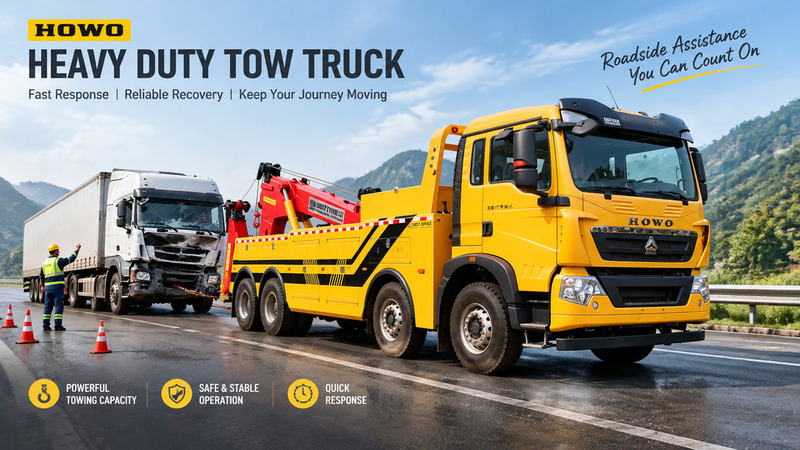
A conventional recovery operation may require separate equipment for lifting, winching, and towing. An integrated recovery vehicle combines these functions on one chassis.
This is particularly useful for roadside operators who need to respond quickly.
Consider a loaded delivery truck that has overturned partly onto the shoulder of a highway. The operator may first stabilize the recovery vehicle, position the winch, pull the disabled vehicle into a safer position, and then lift the required axle for towing.
With an integrated setup, these operations can be performed by the same recovery crew without waiting for another specialized vehicle.
For fleet managers, the main advantage is not simply higher lifting capacity. It is having the right recovery functions available at the same location.
5 Technical Points Operators Should Check
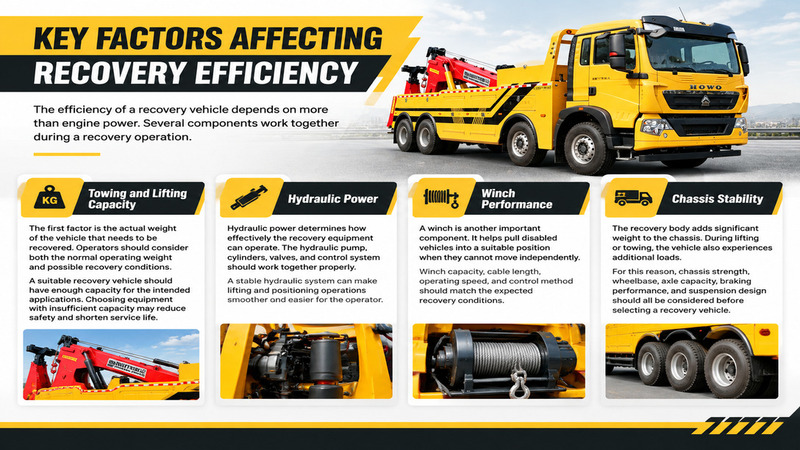
When selecting a hydraulic towing system, fleet managers should also consider how the hydraulic components, winch, stabilizers, and lifting structure work together under actual operating conditions.
1. Rated Recovery Capacity
Start with the vehicles you actually expect to recover.
For example, a company serving passenger cars has very different requirements from a fleet operator recovering 15–30 ton commercial vehicles.
Always distinguish between rated lifting capacity, towing capacity, and actual working capacity under different boom positions.
2. Winch Pulling Force
The winch must match the recovery conditions.
A vehicle stuck on level asphalt requires less pulling force than one trapped in mud or positioned on a slope.
Operators should check:
- Rated line pull
- Cable length
- Cable diameter
- Hydraulic motor capacity
- Winch control method
The published winch rating is only one part of the calculation. The real pulling force changes with the number of cable layers on the drum and the recovery angle.
3. Stabilizing Legs
Stabilizer legs transfer part of the recovery load to the ground and help prevent unwanted movement.
For heavy lifting, the operator should deploy them on a firm surface and keep the vehicle properly positioned.
The stabilizer footprint and ground condition matter just as much as the nominal lifting capacity.
4. Hydraulic Cylinders
Cylinder diameter, stroke length, mounting position, and working pressure affect the movement of the recovery equipment.
A larger cylinder is not automatically better. The hydraulic circuit must be matched to the pump, valves, hoses, and structural components.
5. Chassis and Axle Load
The recovery body adds considerable weight to the truck.
When the recovery mechanism lifts a vehicle, the load distribution changes again. The chassis, axles, suspension, brakes, and wheelbase therefore need to be suitable for the intended application.
Hydraulic Recovery Equipment for Different Workloads
Not every recovery truck needs the same configuration. The right hydraulic towing system depends on the weight, size, and type of vehicles that the operator expects to recover.
A light-duty tow truck is generally suitable for passenger cars and small vans. Medium-duty units handle larger commercial vehicles. Heavy recovery vehicles are intended for trucks, buses, construction equipment, and other high-weight applications.
For professional operators, matching the equipment to the average recovery workload is more economical than simply buying the largest truck available.
A vehicle that is too small may be overloaded. A vehicle that is unnecessarily large can increase purchase cost, fuel consumption, maintenance requirements, and operating restrictions.
What Does a Typical Recovery Operation Look Like?
A professional recovery operation normally follows a controlled sequence.
First, the operator assesses the vehicle and the surrounding area. Traffic, road gradient, vehicle weight, damage, and ground conditions all need to be considered.
Next, the recovery truck is positioned at a safe distance. Stabilizers are deployed when required.
The operator then connects the winch or towing equipment and gradually applies load. Sudden pulling is avoided because shock loading can damage both vehicles and recovery equipment.
Once the disabled vehicle is in a suitable position, the lifting or towing mechanism is adjusted for transport.
During this process, the Hydraulic Towing System allows the operator to control the recovery equipment gradually rather than applying sudden force. This process shows why control and stability are just as important as raw pulling force.This process shows why control and stability are just as important as raw pulling force.
How to Maintain a Hydraulic Recovery Unit
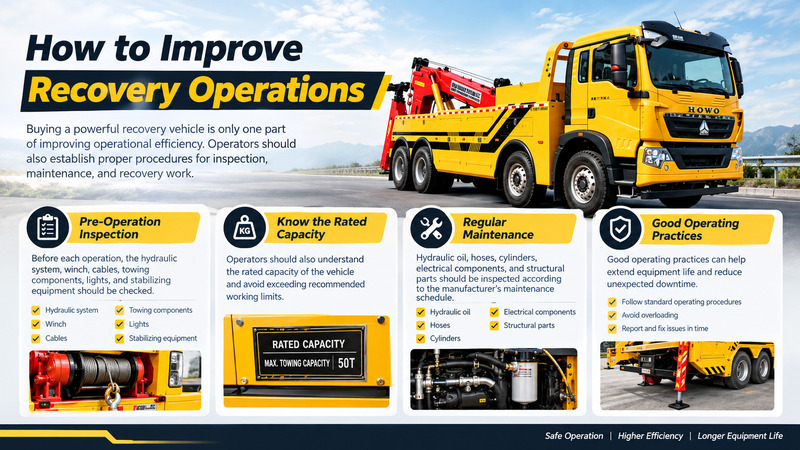
Maintenance requirements depend on the manufacturer’s specifications and operating conditions, so fixed replacement intervals should not be assumed across every model.
Instead, operators should establish a routine inspection schedule.
Before daily operation, check:
- Hydraulic hoses for leaks or damage
- Hydraulic oil level
- Winch cable condition
- Hooks and shackles
- Cylinder mounting points
- Stabilizer legs
- Warning lights and controls
The steel cable also requires particular attention. Broken wires, severe corrosion, kinks, crushed sections, or deformation are warning signs that require immediate inspection and possible replacement.
Hydraulic oil, filters, hoses, and other components should be serviced according to the equipment manufacturer’s specified interval.
Practical Example: Howo TX25T in Heavy Recovery
The Howo TX25T integrated recovery truck is designed for applications where towing and lifting functions need to be combined on a heavy truck platform.
Instead of treating the vehicle simply as a tow truck, it is more useful to view it as a mobile recovery unit. The chassis provides the carrying platform, while the recovery superstructure handles towing, lifting, and winching operations.
Typical applications include:
- Heavy truck breakdown recovery
- Commercial fleet assistance
- Highway accident recovery
- Bus and large vehicle towing
- Construction vehicle recovery
The exact lifting capacity, winch rating, boom configuration, axle arrangement, and hydraulic specifications should always be confirmed against the final vehicle configuration.
This is particularly important when the vehicle will be used for high-load recovery, because the actual working capacity depends on the complete chassis and superstructure configuration.
How to Choose the Right Heavy Duty Tow Truck?
Fleet managers should start with the recovery jobs they actually receive rather than choosing equipment based only on marketing specifications.
Ask these questions:
What is the heaviest vehicle we need to recover?
Will the truck operate mainly on highways, in cities, or at construction sites?
How often will recovery operations be performed?
Do we need lifting, winching, towing, or all three functions?
What local regulations apply to the completed vehicle?
The answers provide a much better basis for selecting a recovery vehicle than engine horsepower alone.
What’s Next?
A well-designed recovery vehicle is a combination of chassis capacity, hydraulic performance, winching power, lifting structure, and operator control. The best configuration depends on the vehicles being recovered and the conditions in which the truck will work.
If you operate a roadside assistance company, logistics fleet, transport business, or heavy equipment service, we can help you evaluate the right recovery configuration. We can discuss the required towing capacity, winch specification, hydraulic equipment, chassis, and working application. Contact us with your vehicle type, target capacity, and operating conditions, and our team can recommend a suitable recovery solution for your market.
