

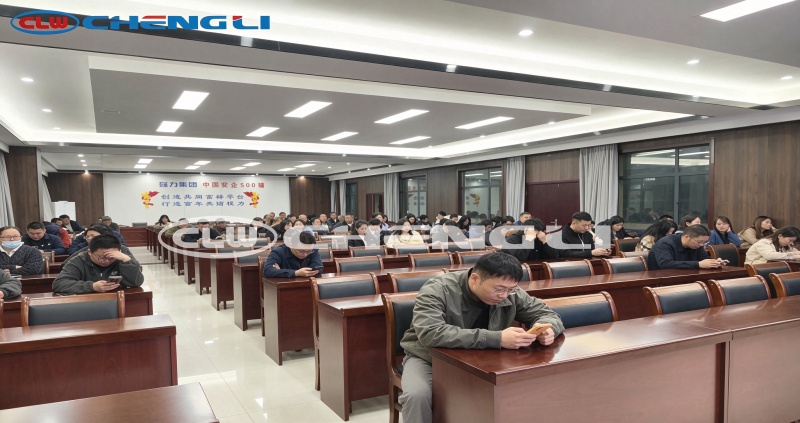
To implement the company’s employee development initiatives and further improve professional skills and overall competencies, CLW Group recently organized a specialized PLC Control Technology Training program for its employees.
The training covered the development of PLC technology, basic working principles, hardware components, and programming applications. Through systematic instruction, employees gained a better understanding of programmable logic controllers and their role in industrial automation. The program also aimed to strengthen their technical knowledge and provide a solid foundation for applying relevant skills in their daily work.
The Role of PLC Technology in Modern Manufacturing
Programmable Logic Controllers play an important role in modern industrial control systems. They are widely used in automated production lines, machinery control, equipment monitoring, and other industrial applications.
By receiving input signals, processing programmed instructions, and sending output commands, PLCs help coordinate different equipment functions and production processes. Their reliable operation and flexible programming make them an important component of industrial automation.
For manufacturing enterprises, understanding PLC technology is valuable not only for technical personnel but also for employees whose work involves equipment operation, production coordination, and technical management. A basic understanding of automated control systems helps employees better understand equipment functions and improve communication when addressing technical issues.
Key Topics Covered in the Training
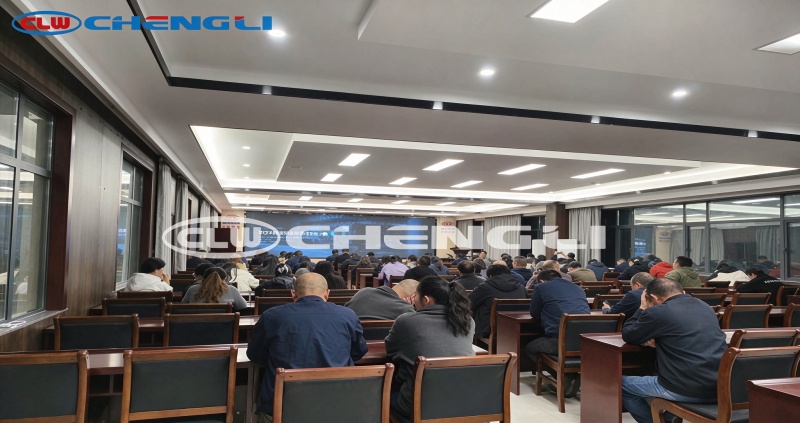
The training focused on three main areas, providing employees with a structured introduction to PLC technology and its practical applications.
1. Development of PLC Technology
Participants learned about the development and evolution of programmable logic controllers (PLCs), gaining a better understanding of their role in the advancement of modern manufacturing and industrial automation.
As an important part of industrial automation training, this topic helped employees understand how PLC technology has developed to meet the changing requirements of industrial control and equipment operation.
2. PLC Working Principles and Hardware Components
The session introduced the basic operating principles of PLC systems and their main hardware components. Key topics included input and output signals, control instruction processing, and the coordination of different components within an automated control system.
This section helped employees develop a clearer understanding of how a PLC receives signals, processes programmed instructions, and controls connected equipment.
3. PLC Programming and Applications
The training also covered fundamental PLC programming concepts and their practical applications. Participants learned about the development and use of control logic in equipment operation, building a foundation for understanding automated processes and control systems.
By introducing the relationship between programming instructions and equipment functions, the session helped employees expand their knowledge of automation-related technologies.
Practical Value of PLC Control Technology Training
The training provided employees with a more systematic understanding of PLC systems, from basic hardware components to programming principles and practical applications.
This knowledge helps employees better understand the relationship between control instructions and equipment operation. It also strengthens their technical awareness when working with automation-related equipment and processes.
In addition, the training encouraged employees to connect theoretical knowledge with practical workplace requirements. Through continuous learning and knowledge exchange, employees can gradually improve their ability to understand technical information and adapt to changing work requirements.
Promoting Employee Skills Development Through Technical Training
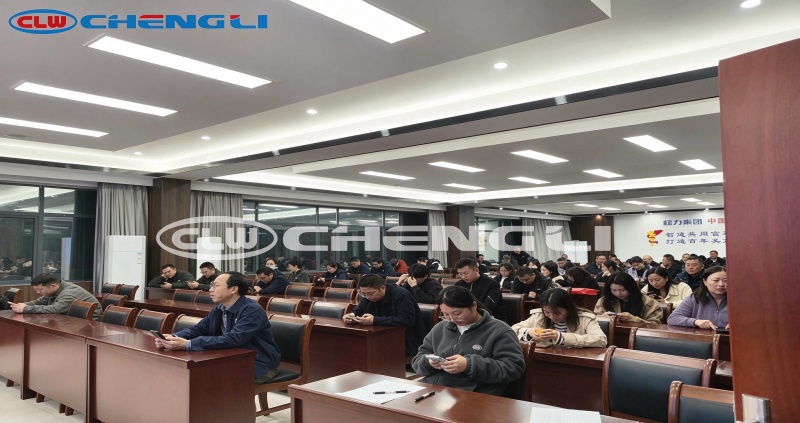
Employee skills development is an important part of CLW Group’s ongoing efforts to strengthen its professional capabilities. Through targeted technical skills training, the company provides employees with opportunities to expand their knowledge, improve their skills, and better understand technologies relevant to their positions.
The PLC Control Technology Training further strengthened employees’ awareness of industrial automation and provided an opportunity for technical learning and knowledge exchange.
By connecting technical knowledge with practical workplace requirements, CLW Group aims to continuously improve employee competencies and better support its operational needs.
Commitment to Continuous Learning and Improvement
Employee training is an ongoing process rather than a one-time activity. As production technologies and industrial requirements continue to develop, employees need to update their knowledge and strengthen their professional capabilities accordingly.
CLW Group places importance on building a skilled workforce and encouraging continuous professional development. By organizing targeted technical training programs, the company aims to create more opportunities for employees to learn new technologies, share professional knowledge, and improve their overall competencies.
These efforts form part of the company’s broader commitment to continuous improvement and provide support for its long-term development.
