

How do maintenance teams repair heavy machinery when the nearest workshop is hundreds of kilometers away?
In mining areas, construction sites, and remote industrial projects, moving broken equipment to a fixed facility often causes expensive downtime. A properly specified 6×6 Mobile Workshop Truck solves this problem by bringing a fully equipped maintenance workspace directly to the job site.
However, not every mobile workshop performs well under real field conditions. The difference usually comes down to a few critical factors. Here is a practical buying guide to help you evaluate the right vehicle.
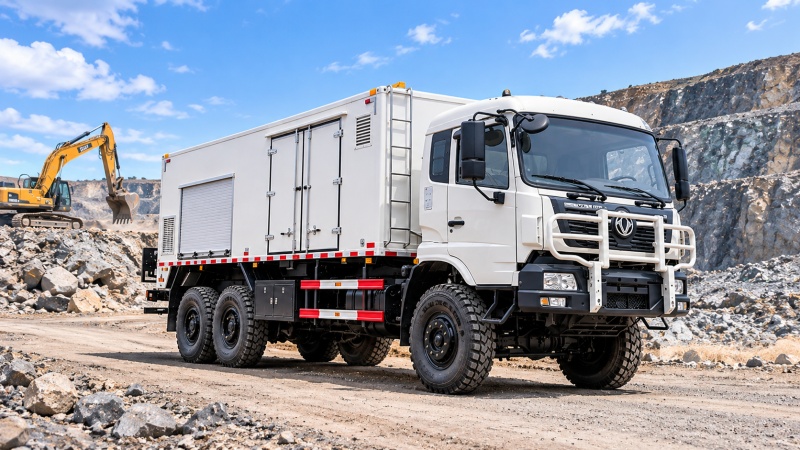
Table of Contents
1. Prioritize 6×6 Drive Capability for Difficult Terrain
Remote sites often involve gravel roads, mud, uneven ground, and steep access routes. A 6×6 drive system powers all six wheels, giving better traction and mobility than standard configurations.
When comparing options, check:
- Drive configuration and axle ratings
- Tire size and suitability for local terrain
- Ground clearance
- Engine performance under full load
This is the foundation of any reliable field maintenance vehicle.
2. Evaluate Chassis Strength and Engine Performance
A mobile workshop carries tools, spare parts, generators, and equipment in addition to its own weight. An undersized chassis limits what you can safely carry and reduces durability over time.
Review these key figures carefully:
- Gross vehicle weight and curb weight
- Engine power and torque
- Axle load ratings
- Fuel capacity for extended field use
A typical heavy-duty reference configuration offers around 300 HP, 1,100 Nm of torque, and a 20,000 kg gross vehicle weight.
3. Confirm Practical Workshop Body Dimensions
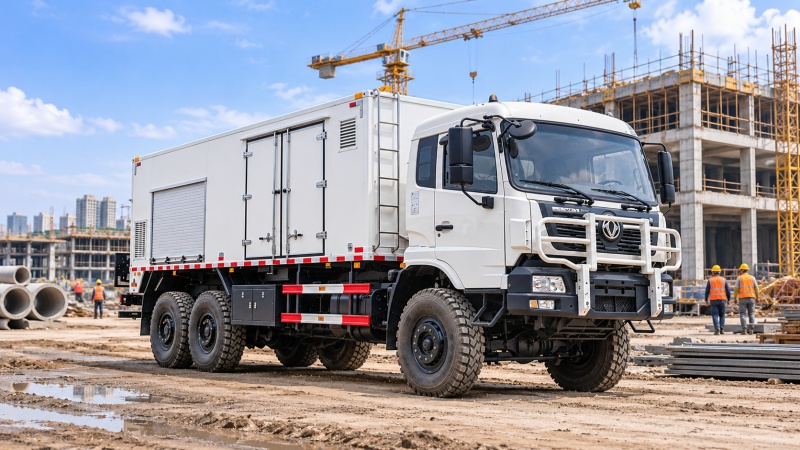
Technicians need enough internal space to work efficiently. Cramped layouts slow down repairs and create clutter.
An internal size in the range of 5,300 × 2,400 × 2,200 mm generally provides a good balance between working room and vehicle maneuverability. Confirm that the dimensions allow clear movement, workbenches, and organized storage.
4. Check Body Construction Quality
Field environments expose the vehicle to dust, temperature changes, vibration, and constant door use. Body quality directly affects sealing, cleanliness, and service life.
Focus on:
- Panel materials and insulation
- Door sealing and locking systems
- Floor strength
- Equipment mounting points
A durable body protects both tools and the long-term usability of the workshop.
5. Review Suspension and Load Distribution
Even a strong chassis can underperform if weight is poorly distributed. Uneven loading increases tire wear, reduces stability, and affects handling and braking.
Before ordering, ask for a weight distribution plan based on your planned equipment. Pay close attention to front and rear axle loads, total operating weight, and tire capacity. Proper balance is just as important as total payload.
6. Match Interior Configuration to Your Industry
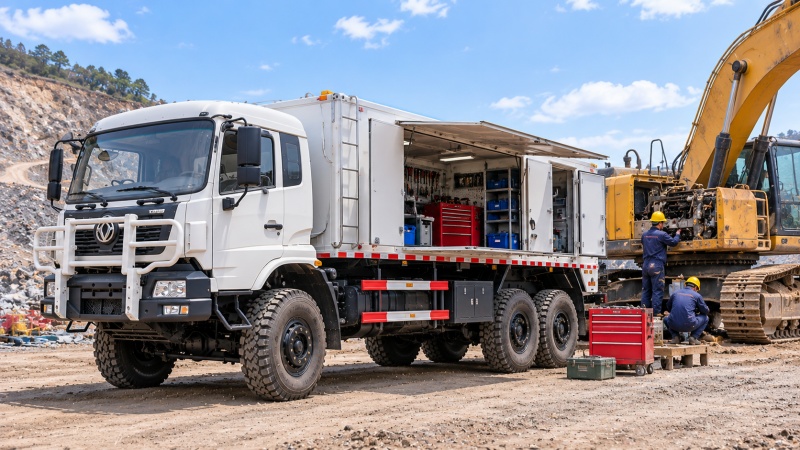
Different operations need different workshop setups. A mining team’s requirements differ from those of a construction crew or fleet maintenance unit.
| Application | Typical Workshop Needs |
|---|---|
| Mining Operations | Tool storage, spare parts racks, heavy equipment workspace |
| Construction Sites | General repair tools, workbenches, organized storage |
| Remote Industrial Projects | Maintenance equipment, electrical connections, utility storage |
| Fleet Maintenance | Diagnostic tools, spare parts storage, technician workspace |
Share your equipment list and primary use case early so the layout can be planned around real workflows without exceeding payload limits.
A Final Pre-Purchase Checklist
Before making a final decision, confirm the following points with the supplier:
- Chassis capability (drive type, engine, axles, tires)
- Usable internal workshop dimensions
- Body construction quality and sealing
- Equipment layout and mounting provisions
- Total payload after installing tools and parts
- Ability to customize the interior to your needs
Requesting technical drawings and a detailed equipment list before production helps avoid costly changes later.
Frequently Asked Questions
1. What is a 6×6 Mobile Workshop Truck used for?
It provides a mobile workspace for equipment maintenance at mining sites, construction projects, and remote industrial locations.
2. Why choose a 6×6 chassis for a mobile workshop?
A 6×6 configuration drives all six wheels, making it a suitable option for demanding road and site conditions.
3. Can the workshop interior be customized?
Yes. Buyers can discuss workbenches, storage cabinets, tool racks, and other equipment arrangements with the manufacturer.
4. What is the internal size of the Dongfeng 6×6 Mobile Workshop Truck?
The model in our catalog has internal body dimensions of 5,300 × 2,400 × 2,200 mm.
5. What should I consider before purchasing a mobile workshop truck?
Check chassis performance, body dimensions, payload, equipment requirements, and customization options.
Conclusion: Configure Your Mobile Workshop Truck
A reliable mobile workshop starts with the right chassis, sufficient working space, and an equipment layout that matches daily needs. For companies operating far from fixed facilities, these factors determine how quickly teams can return machinery to service.
If you are evaluating a 6×6 mobile workshop truck for mining, construction, or remote industrial projects, contact our team to discuss your project requirements and request a customized quotation.
