

Field operations and remote mission deployments place high demands on personnel transportation. Selecting a suitable troop carrier truck directly affects team mobility, crew safety, and mission efficiency. Many buyers struggle to balance passenger capacity, off-road performance, and available custom features when comparing models.
This troop carrier truck Buying Guide breaks down the core purchasing factors — seating capacity, terrain adaptability, and practical custom options — to help you filter qualified vehicles and avoid common pitfalls when sourcing troop transport solutions.
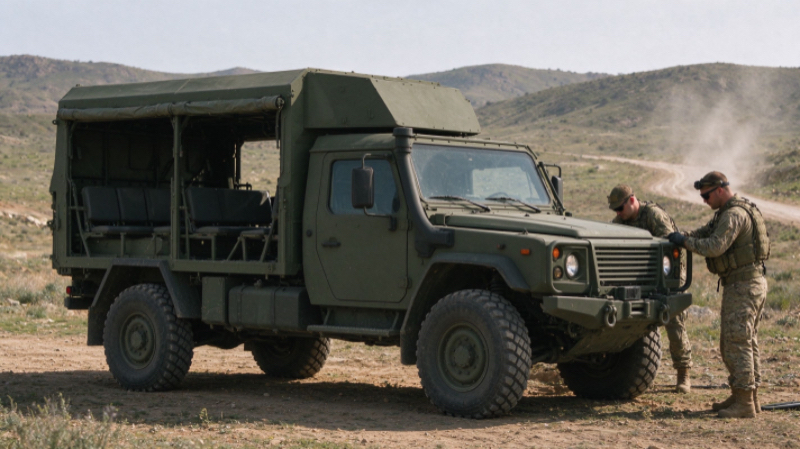
Table of Contents
Understand Required Passenger Capacity for Troop Missions
When evaluating a troop carrier truck, passenger capacity is the first baseline requirement. Capacity should match your typical mission size without overloading the chassis and suspension system.
Standard seating configurations:
- Light-duty 4×4 Troop Carrier Truck: Carries 8–12 personnel, ideal for small reconnaissance teams
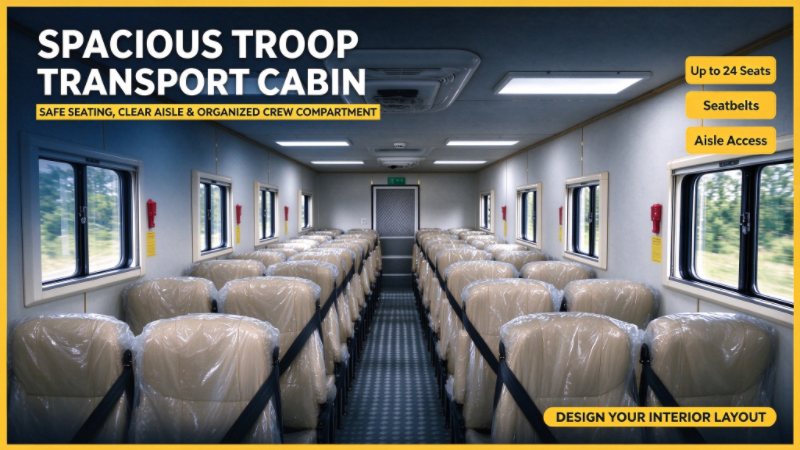
- Medium-duty 4×4 / 6×6 Troop Carrier Truck: Carries 16–24 personnel, suitable for regular field deployment
- Heavy-duty 6×6 Troop Carrier Truck: Carries 26–32 personnel, designed for large-scale troop movement
Important note: Count not only soldiers, but also onboard gear, weapons, and supplies. Extra equipment takes up interior space and adds significant vehicle load weight.
Never judge a troop carrier truck solely by seat quantity. Always check the rated payload of the entire chassis. Overloading damages tires and suspension and reduces off-road reliability.
Terrain Adaptability: Match Driving Conditions to Your Use Case
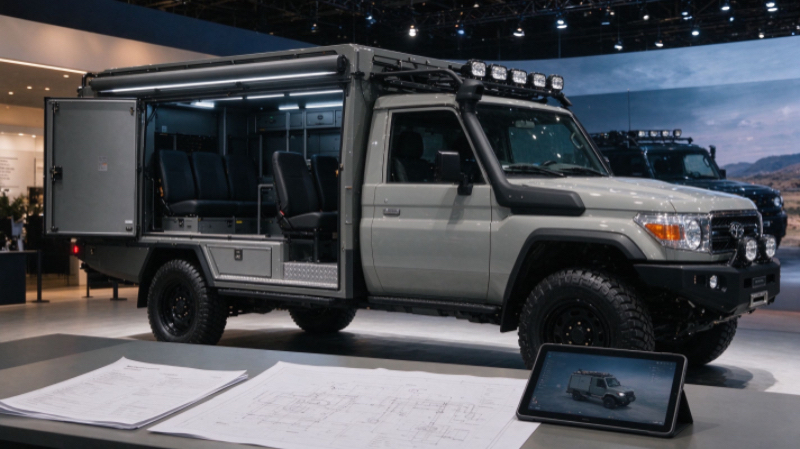
Different operating environments determine which drive system you should select for your troop transport truck.
1. 4×4 drive for general complex terrain
A 4×4 troop transport truck works well on gravel roads, hilly zones, and muddy wilderness. It balances mobility and cost for most defense and government projects and remains the most popular option for export orders.
2. 6×6 drive for extremely harsh environments
For swamp, desert, deep snow, and mountainous no-road zones, choose a 6×6 all-wheel-drive troop transport truck. Extra rear axles improve ground traction and load-bearing performance. Note that 6×6 models come with higher procurement and maintenance costs.
Key terrain-related components to inspect:
- Heavy-duty off-road tires with strong puncture resistance
- High ground clearance to clear rocks and obstacles
- Adequate water-wading capability for river-crossing missions
- Reinforced shock absorbers for long-distance bumpy travel
Comparison of Troop Carrier Truck Types
| Model Type | Max Fully-equipped Personnel | Drive Type | Typical Scenarios | Core Advantages | Key Limitations |
|---|---|---|---|---|---|
| Light-duty Troop Carrier | 8–12 | 4×4 | Small reconnaissance teams, short-range missions | Low cost, flexible mobility, easy maintenance | Limited payload, not ideal for heavy gear |
| Medium-duty Troop Carrier | 16–24 | 4×4 / 6×6 | Conventional troop deployment | Balanced capacity & off-road performance | Larger body size, needs more road space |
| Heavy-duty Troop Carrier | 26–32 | 6×6 | Large-scale movement, extreme conditions | Strong load-bearing, excellent cross-country | Higher purchase & maintenance cost, higher fuel use |
When making your selection, do not rely only on seating numbers. Always factor in onboard weapons, communication equipment, and field supplies into the overall payload calculation.
Must-Have Custom Options for Troop Carrier Trucks
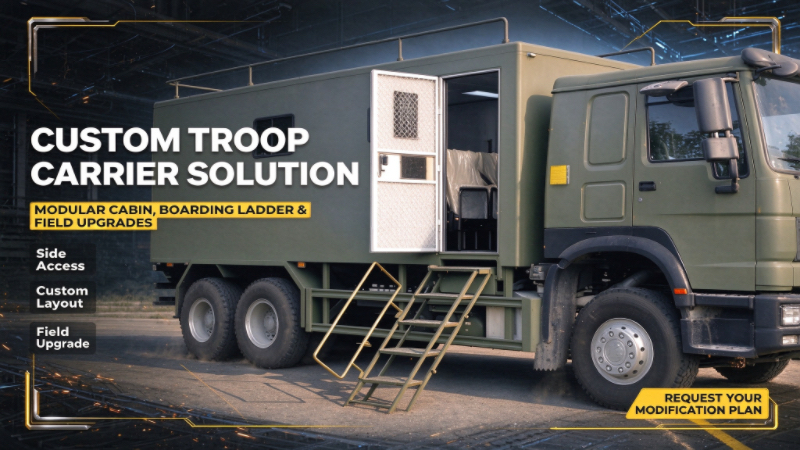
Most overseas clients require modifications to the base chassis to fit local mission requirements. Below are practical custom configurations frequently selected by global buyers:
- Armored cabin upgrade: Ballistic protection for driver and crew against fragment impacts
- Roof hatch & weapon mount: Positions for defensive equipment during field missions
- Climate control system: Heavy-duty air-conditioning or heating for tropical or alpine regions
- Interior storage racks: Fixed racks for guns, communication devices, first-aid kits, and supplies
- Exterior auxiliary lighting: High-brightness searchlights for night-time transportation tasks
Common Mistakes to Avoid When Buying Troop Carrier Trucks
- Ignoring local import certification requirements — Some regions demand special vehicle inspection documents for military-related transport vehicles. Confirm certification standards before placing orders.
- Over-specifying configurations — Buying a 6×6 heavy-duty model when daily missions only need 4×4 creates unnecessary budget waste.
- Neglecting after-sales support — Spare-parts supply and technical guidance are critical for long-term fleet operation.
Conclusion: Troop Carrier Truck Buying Guide
Selecting a qualified troop carrier truck requires balanced consideration of passenger capacity, terrain conditions, and available custom modifications. Clarify your real-world mission scenarios first instead of blindly chasing higher-level chassis parameters. Whether you need light-duty 4×4 models or heavy-duty 6×6 vehicles, proper configuration matching will maximize fleet service life and mission reliability.
Ready to get tailored troop carrier truck suggestions for your project?
Contact us today! Our engineering team can analyze your terrain, capacity, and budget needs and deliver detailed quotations and configuration proposals.
Frequently Asked Questions
Can troop carrier trucks be modified for tropical high‑humidity coastal areas?
Yes. We can apply anti‑corrosion paint, a heavy‑duty air‑conditioning system and rust‑proof chassis treatment to adapt to high‑humidity coastal operating environments.
What documents will you provide for exported troop carrier trucks?
We supply factory inspection reports, packing list, commercial invoice and other export‑required files. We can cooperate with you to meet your local import certification requirements.
What kind of maintenance does a troop carrier truck require for long‑term field use?
Regular inspections of the suspension, off‑road tires and cooling systems are necessary. For a field-deployed fleet, we recommend checking chassis fasteners every 100 operating hours. We also supply complete spare‑parts packages and operation manuals to support your long‑term fleet maintenance.
Can I order partial modifications instead of full upgrades for my troop carrier truck?
Absolutely. Partial custom upgrades are available. You can select separate features such as roof hatches, air‑conditioning systems, or interior storage racks, without paying for unnecessary full‑vehicle armored upgrades to better fit your project budget.
