

Selecting a Crude Oil Tanker Semi Trailer for Colombia involves far more than choosing tank capacity and arranging shipment. Importers must carefully verify vehicle homologation, tank specifications, customs documents, and dangerous goods transport regulations before placing an order.
Whether you need a 3-Axle Crude Oil Tanker Semi Trailer or a 40,000L Oil Tanker Trailer for Colombia, the correct configuration must fully comply with local transport rules and match the specific characteristics of your cargo. This guide covers the key compliance points, essential technical documents, and common risks so you can prepare your project properly and avoid costly delays.
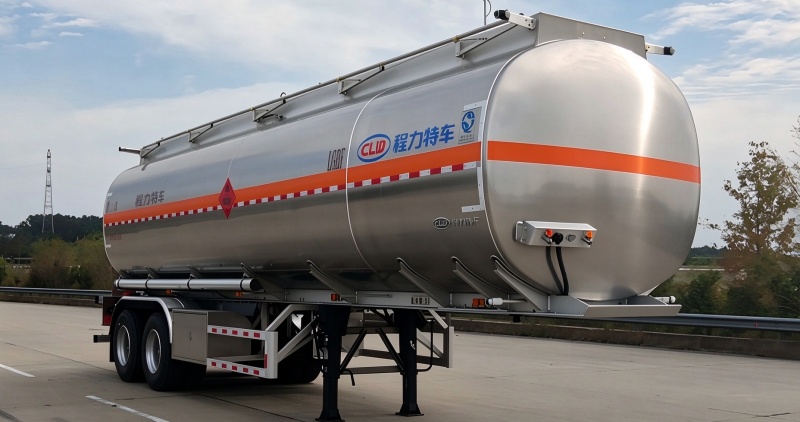
Table of Contents
Does a Crude Oil Tanker Semi Trailer for Colombia Need Homologation?
Yes. Colombia requires a formal vehicle homologation process for trailers and semi-trailers used in both public and private cargo transport.
Before importing a Crude Oil Tanker Semi Trailer or a Fuel Tank Truck for Colombia, you must confirm the applicable vehicle approval process and required technical documentation.
The Ministry of Transport (Ministerio de Transporte) manages this process through the RUNT system (Registro Único Nacional de Tránsito).
What is vehicle homologation?
Homologation verifies that the vehicle or semi-trailer meets Colombia’s technical requirements. For a Crude oil transport trailer, the review typically covers:
- Vehicle type and intended application
- Overall dimensions and axle configuration
- Maximum authorized weight and load capacity
- Technical specifications of the tank body
- Braking system and safety equipment
- Technical drawings and supporting documents
How can importers prepare for homologation?
Ask the supplier to provide the following before production or shipment:
- General arrangement drawings
- Tank structure and material specifications
- Axle and suspension specifications
- Brake system details
- Tire specifications and load ratings
- Empty weight and maximum design capacity
- VIN or chassis identification information (as applicable)
Important: Confirm the exact homologation category and document format with the Colombian Ministry of Transport or an authorized local representative. An international certificate does not automatically replace Colombian homologation.
What Technical Documents Should a Crude Oil Transport Trailer Provide?
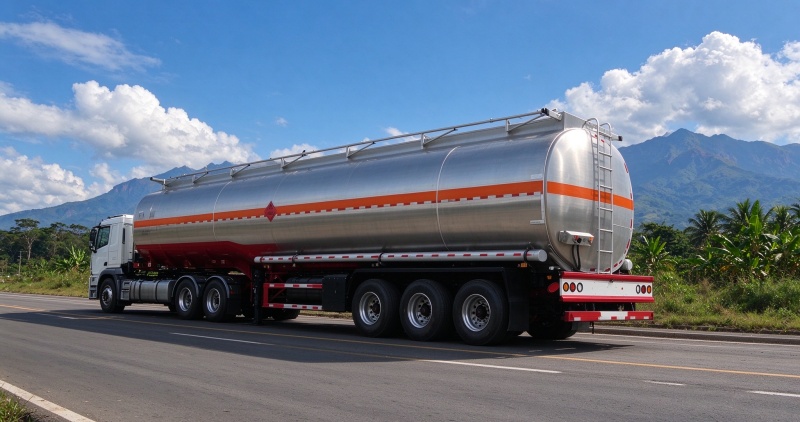
A complete technical document package is essential for the importer’s compliance review. The manufacturer should prepare a full set of documents for every Crude Oil Tanker Semi Trailer for Colombia.
1. Basic vehicle documents
- Commercial invoice and packing list
- Manufacturer’s technical specification sheet
- Vehicle identification details
- Overall dimensions and weight
- Axle configuration and load capacity
- Tank capacity and compartment arrangement
- Technical drawings and photographs
2. Tank body specifications
The tank is the most critical component. The manufacturer must clearly state:
- Tank material and thickness
- Tank capacity and number of compartments
- Internal structure and reinforcement
- Manhole and loading arrangements
- Discharge valve and pipeline configuration
- Pressure and vacuum design limits (where applicable)
- Anti-surge baffles (if included)
- Surface treatment and corrosion protection
3. Additional test reports (depending on design and Colombian requirements)
- Tank material certificates
- Welding procedure and inspection records
- Pressure or leak test reports
- Structural calculation documents
- Inspection and quality control records
Confirm the exact test requirements with local authorities before manufacturing begins.
Understand Colombia’s Dangerous Goods Transport Regulations
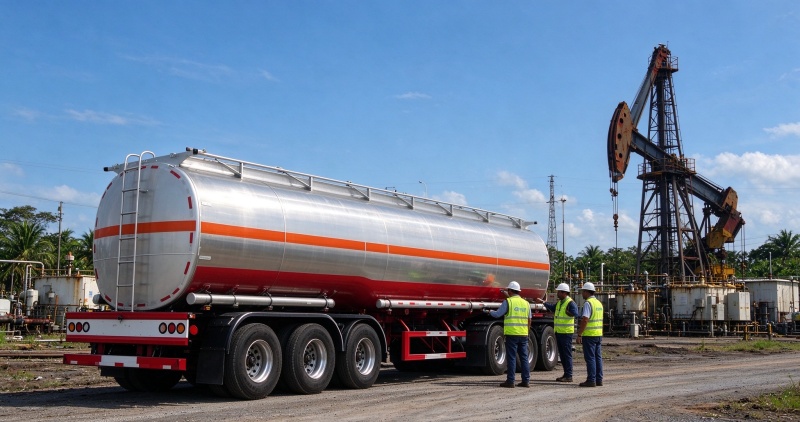
Crude oil is generally classified as a dangerous good for transport. Confirm the exact classification and UN number based on the cargo’s properties.
Colombia regulates road transport of dangerous goods under Section 8 of Decree 1079 of 2015 (which incorporates requirements from Decree 1609 of 2002).
Key operating requirements include:
Vehicle and transport unit identification
- Proper dangerous goods labels and markings
- Clear identification of the transported cargo
- Required safety and emergency equipment
Driver and transport company
- Drivers must complete mandatory dangerous goods training
- The transport company must comply with all operating and safety rules
- Regular preventive maintenance of the vehicle and transport unit is required
Emergency preparation
- Drivers must have access to the relevant emergency card
- Operations must follow approved emergency response procedures
- The transport company should maintain a suitable emergency plan
Does a Crude Oil Tanker Semi Trailer Need ADR Certification?
No, not automatically.
ADR is a European agreement. Colombia has its own national regulatory framework. An ADR-related design or test document may support a technical review, but it cannot replace Colombian requirements. Always confirm the applicable local standards, test reports, and certificates for your specific tanker design and cargo.
Check the Specific Requirements for Petroleum Transport in Colombia
Colombia has additional rules for the road transport of petroleum products and liquid fuels.
Under Article 2.2.1.1.2.2.3.86 of Decree 1073 of 2015 (as amended by Decree 1135 of 2022), road transport of liquid fuels, biofuels, and their mixtures must use tank-type bodies. Transporters must also carry (or have continuous digital access to) the applicable hydrocarbon transport guide.
What should importers confirm before ordering?
- Is the cargo crude oil or a refined petroleum product?
- What is the official cargo classification and UN number (if applicable)?
- What are the density, viscosity, and operating temperature?
- Does the cargo require heating or insulation?
- What tank material and internal coating are suitable?
- What discharge system does the customer need?
Important: Requirements for crude oil can differ significantly from those for gasoline, diesel, or other refined fuels. Never apply fuel-specific rules to crude oil without confirming the exact cargo classification.
Prepare the Customs Documents for Crude Oil Tanker Semi Trailer Import
Vehicle homologation and customs clearance are separate procedures. Completing one does not automatically complete the other.
Colombia’s Ministry of Commerce, Industry and Tourism recommends confirming the tariff classification and importer registration in advance.
Main documents to prepare:
- Commercial invoice
- Packing list
- Bill of lading
- Import declaration
- Certificate of origin (if applicable)
- Product technical specifications
- Vehicle identification and manufacturer details
- Homologation documents (where required)
Correct tariff classification directly affects import duties, taxes, and possible import controls. Work with a Colombian customs broker or DIAN to determine the accurate HS code. Do not select a code based only on the product name — classification depends on the vehicle’s structure, function, and technical characteristics.
How to Choose the Best Crude Oil Tanker Semi Trailer for Colombia?
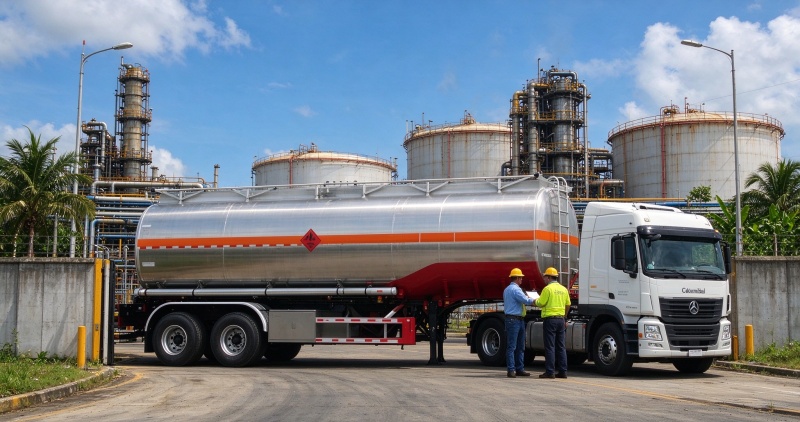
A compliant tanker must also match your actual transport needs. An unsuitable configuration can create operational problems even if all import documents are complete.
Is a 3-Axle Crude Oil Tanker Semi Trailer Suitable?
A 3-axle configuration is one common option, but suitability depends on:
- Maximum permitted axle loads
- Total combination weight
- Tank capacity and payload
- Tractor compatibility
- Suspension and braking performance
- Local road and operating conditions
The number of axles alone does not determine compliance. Always evaluate the complete vehicle combination against Colombian weight and dimension limits.
What to Consider for a 40000L Oil Tanker Trailer for Colombia
| Item | Details to Confirm |
|---|---|
| Tank capacity | 40,000 L or other required volume |
| Tank material | Carbon steel or another suitable material |
| Compartments | Single or multiple compartments |
| Axle configuration | Number of axles and load distribution |
| Suspension | Mechanical or air suspension |
| Braking system | ABS and applicable braking configuration |
| Tires | Size and load rating |
| Discharge system | Valve type, pipe size, and outlet position |
| Safety equipment | Emergency valves and other required devices |
Consider Colombia’s road conditions
Colombia features mountainous terrain and long-distance routes. Pay special attention to:
- Total combination weight
- Axle loads and weight distribution
- Suitable suspension and braking systems
- Tractor and semi-trailer compatibility
- Overall dimensions and turning radius
- Corrosion protection and maintenance access
The final configuration must match your specific routes, tractor specifications, cargo characteristics, and local legal limits.
Common Import Problems and How to Avoid Them
Problem 1: Incomplete homologation documents
Solution: Confirm RUNT requirements and document formats early. Prepare drawings, specifications, and identification details before shipment.
Problem 2: Tank specifications do not match the cargo
Solution: Confirm cargo classification, density, temperature, and chemical properties before selecting tank material and structure.
Problem 3: Confusing ADR with Colombian approval
Solution: Treat ADR documents only as supporting references. Always verify Colombian requirements with local authorities or specialists.
Problem 4: Incorrect customs classification
Solution: Have a Colombian customs broker verify the HS code and import controls before placing the order.
Problem 5: Semi-trailer does not match the tractor
Solution: Check fifth-wheel height, kingpin specifications, axle loads, braking connections, and overall combination dimensions before production.
Pre-Shipment Document Checklist
- Commercial invoice and packing list
- Technical specification sheet
- General arrangement drawings
- Tank material and structure details
- Axle, suspension, and braking specifications
- Vehicle identification information
- Applicable tank test reports
- Homologation document requirements confirmed
- HS code and import controls checked
- Dangerous goods cargo classification confirmed
- Tractor compatibility verified
What’s Next?
Choosing the right Crude Oil Tanker Semi Trailer for Colombia starts with a clear understanding of the cargo, local regulations, and real operating conditions. Confirm the homologation process, tank technical requirements, customs classification, and dangerous goods rules before placing an order.
Whether you need a 3-axle configuration or a 40,000L tanker, do not wait until the vehicle arrives at the destination port to review the documents. Work closely with your supplier, customs broker, and local compliance specialist from the beginning. This approach significantly reduces document errors, avoids unnecessary delays, and ensures the tanker fully matches your operational needs.
Planning to import a crude oil tanker semi trailer from China to Colombia?
Contact our team for technical specifications, tank configuration advice, and complete export document support. We help you prepare every detail before production and shipment.
