

The commercial vehicle industry is moving toward electrification. Municipal fleets, construction companies, logistics operators and industrial facilities are increasingly considering electric vehicles for daily commercial work.
Electric special vehicles are designed for specific jobs rather than general transportation. They can be used for waste collection, road sweeping, water spraying, facility maintenance, cargo delivery and other commercial operations.
An electric special-purpose vehicle normally combines an electric commercial vehicle chassis with a dedicated body or working system. The final configuration may include a waste compactor, sweeping equipment, water tank, crane, refrigerated body or other specialized equipment.
For buyers, the important factors go beyond the electric motor and battery. Daily mileage, payload, working hours, body equipment, charging conditions and local regulations all affect the vehicle specification.
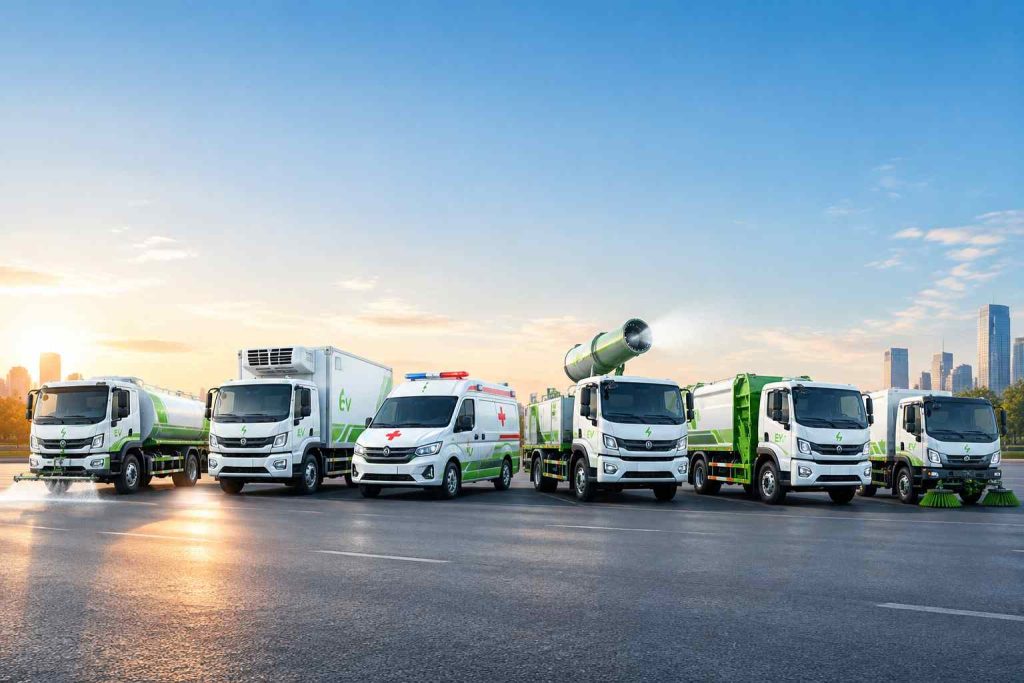
Table of Contents
What Are Electric Special Vehicles?
Electric special vehicles are commercial vehicles powered by an electric drivetrain and fitted with a specialized body or working equipment for a particular job. They are also known as electric special purpose vehicles, electric work vehicles, or electric commercial trucks.
The main difference between a standard electric truck and an electric special vehicle is the working equipment installed on the chassis. A standard truck is mainly designed to transport goods, while a special vehicle is configured to perform a specific commercial task. For example:
In simple terms, an electric special vehicle combines an electric commercial vehicle chassis with specialized working equipment.
What Makes a Vehicle a Special-Purpose Commercial Vehicle?
A special-purpose commercial vehicle is built around a specific working task. Unlike a standard cargo truck, it may need to collect waste, wash roads, spray water, carry tools or operate specialized equipment.
The body and working equipment are therefore an important part of the vehicle design. The chassis provides the driving system, while the superstructure performs the main commercial task.
Electric Chassis and Specialized Working Equipment
Electric special vehicles use an electric commercial chassis as the base vehicle. The working equipment may receive power through an electric motor, electric PTO or electro-hydraulic system, depending on the vehicle design.
This means the battery needs to support not only driving but, in some configurations, part of the energy demand from the working equipment. This should be considered when selecting the battery capacity.
7 Types of Electric Special Vehicles
Electric special-purpose vehicles can be configured for different commercial and municipal applications. The most common types include sanitation vehicles, water trucks, utility vehicles, logistics trucks and other specialized commercial vehicles.
1. Electric Garbage Trucks
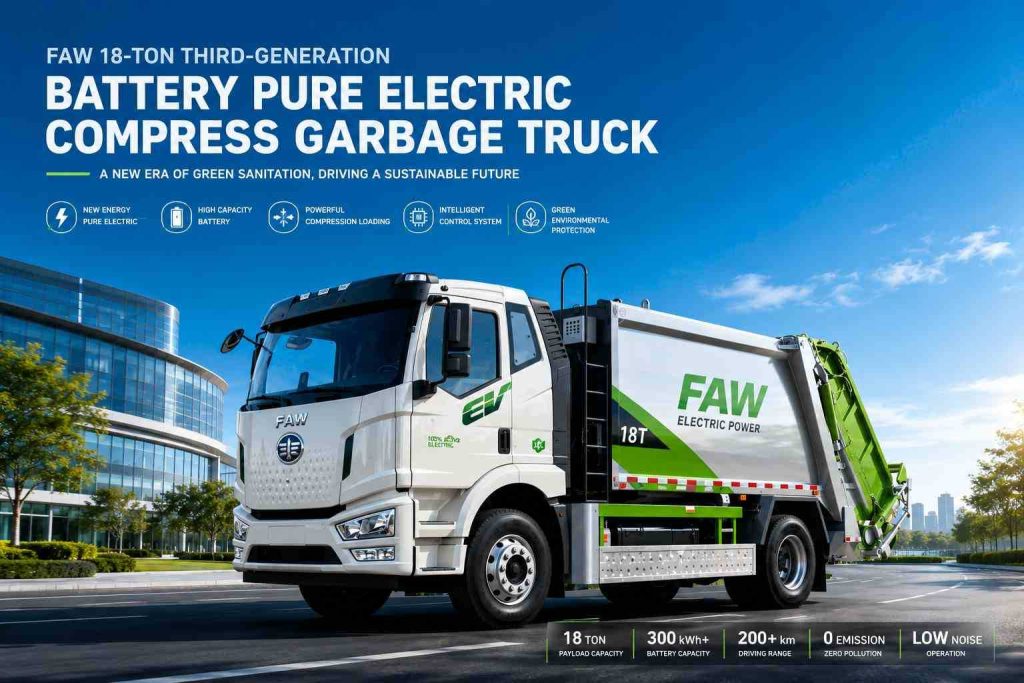
Electric garbage trucks are commonly used for municipal and residential waste collection, especially on fixed routes that return to a central depot.
A typical medium-duty configuration may use a battery in the 100–200 kWh range and cover around 80–150 km per day, but actual figures vary with payload, road conditions, collection frequency and body equipment.
Common configuration points include:
- Battery capacity matched to the daily collection route
- Waste compactor and bin-lifting system
- Electric or electro-hydraulic power for body equipment
- Charging at a municipal or fleet depot
- Payload selected according to the waste collection volume
Typical deployment: The truck leaves the depot in the morning, follows fixed residential collection routes and returns to the same location for charging.
Electric models may also reduce fuel and some routine powertrain maintenance costs compared with diesel vehicles. However, the initial purchase price, battery cost and charging infrastructure should be included when comparing total operating costs.
2. Electric Street Sweepers
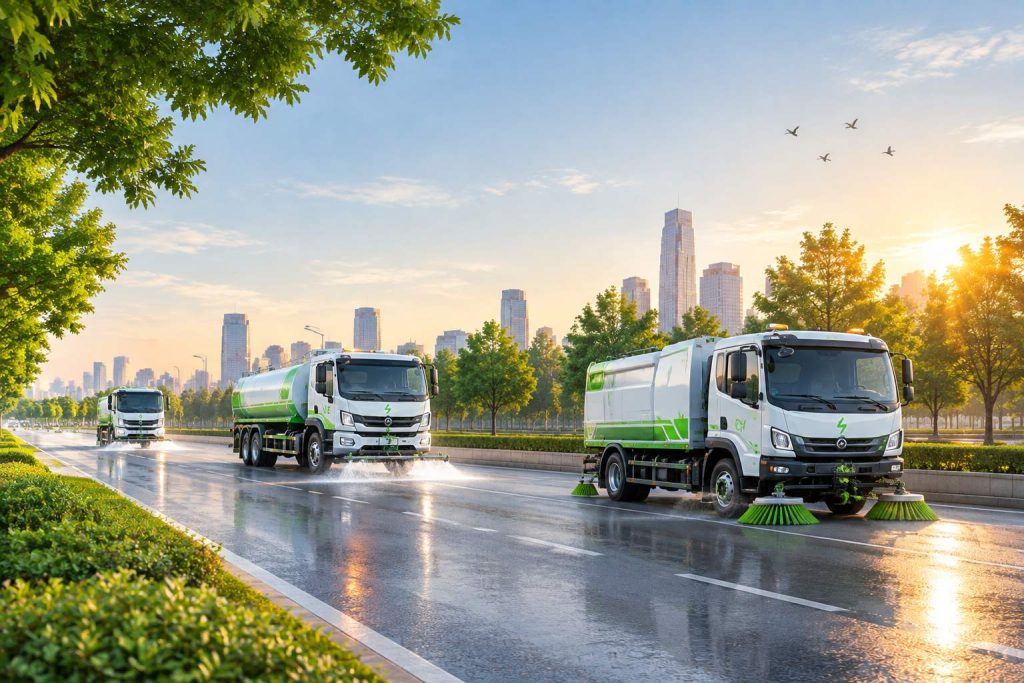
Electric street sweepers are designed for road, industrial park, airport, port and facility cleaning.
Their battery capacity is normally matched to the required cleaning hours and route length. A typical working shift may involve several hours of sweeping before the vehicle returns to a fixed charging location.
Common equipment includes:
- Sweeping brushes
- Suction system
- Water spraying system
- Dust suppression equipment
- Electric drive for the working system
Typical deployment: An airport or port sweeper can follow a defined cleaning route during a shift and return to its designated charging area after completing the work.
Lower operating noise can also be useful when cleaning needs to be carried out during early morning, evening or night hours.
3. Electric Water Trucks
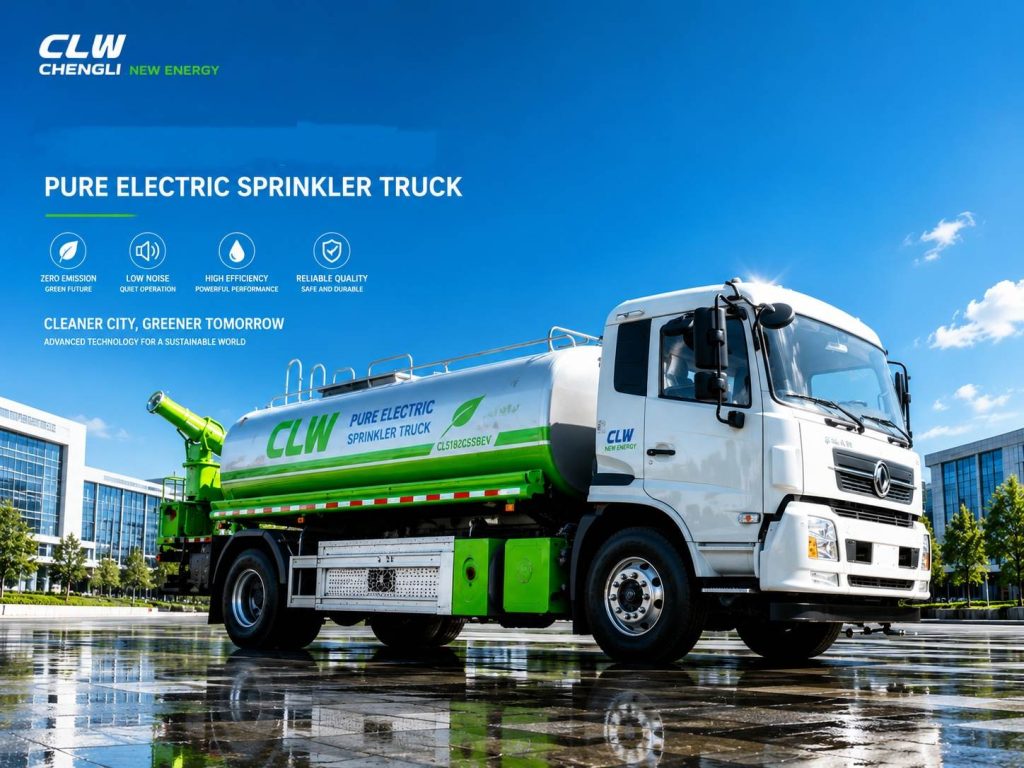
Electric water trucks are used for dust suppression, road washing, landscaping and other water-spraying tasks.
The water tank capacity is selected according to the required spraying volume and operating area. The truck may be equipped with a rear spray bar, side spraying system, water cannon or other water distribution equipment.
Key selection points include:
- Water tank capacity
- Daily spraying distance
- Pump and spraying system
- Required working hours
- Available charging location
Typical deployment: At a construction site, an electric water truck can spray internal roads for dust control, operate around the site and return to a fixed charging point when the work shift is finished.
4. Electric Utility and Maintenance Trucks
Electric utility trucks are used for municipal maintenance, industrial parks, airports, ports and other facilities where technicians need to carry tools and equipment.
Depending on the job, the vehicle may use a tool body, work platform, crane or other equipment.
Before ordering, buyers should check:
- Daily driving distance
- Working hours
- Payload and equipment weight
- Power requirements of the working equipment
- Road and site conditions
- Charging location
For example, a maintenance truck working inside an industrial park may travel a relatively short distance but spend several hours at different work locations. In this case, working time and equipment energy consumption can be just as important as driving range.
5. Electric Construction and Engineering Vehicles
Electric powertrains are also being introduced into construction and engineering applications. Potential vehicle types include:
- Electric dump trucks
- Electric construction trucks
- Electric concrete mixer trucks
- Electric engineering vehicles
- Electric service trucks
- Electric crane trucks
The suitability of an electric vehicle depends heavily on the operating conditions.
For example, a vehicle operating on a fixed construction site or between a construction site and a nearby depot may have a more predictable duty cycle than a long-distance engineering vehicle.
6. Electric Refrigerated and Cargo Trucks
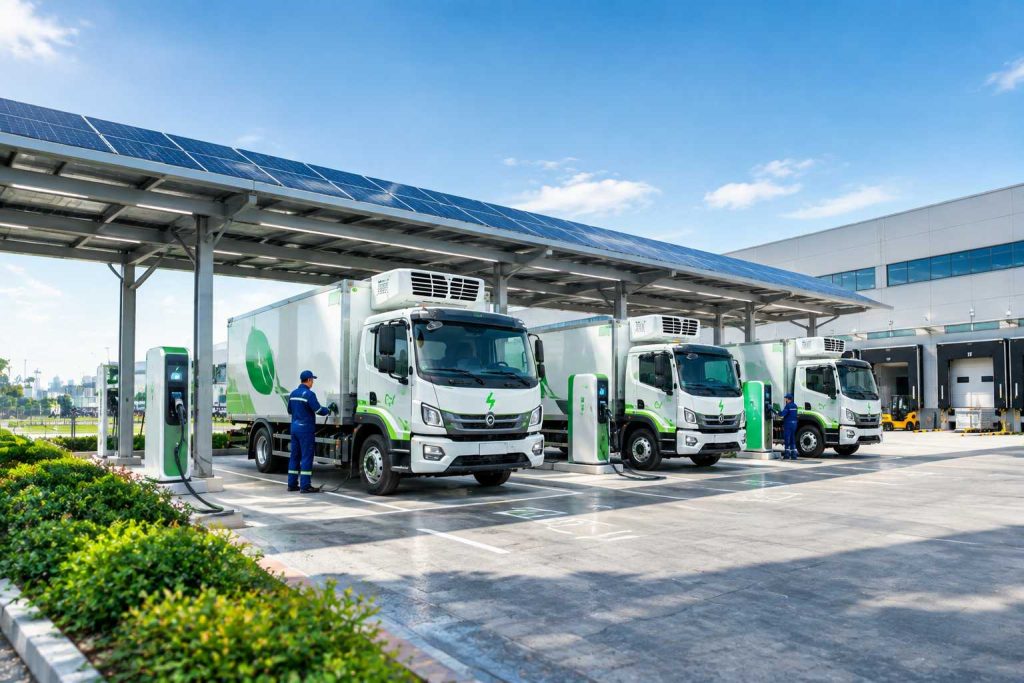
Electric cargo and refrigerated trucks are mainly used for short- and medium-distance commercial delivery.
The battery should be matched to the route, payload and working schedule. Refrigerated vehicles also need to consider the energy consumption of the refrigeration unit.
Typical deployment: A refrigerated truck may travel from a warehouse to supermarkets or restaurants and return to the depot for charging.
For cargo applications, the body size and payload should be selected according to the actual goods being transported rather than battery capacity alone.
7. Electric Emergency and Rescue Vehicles
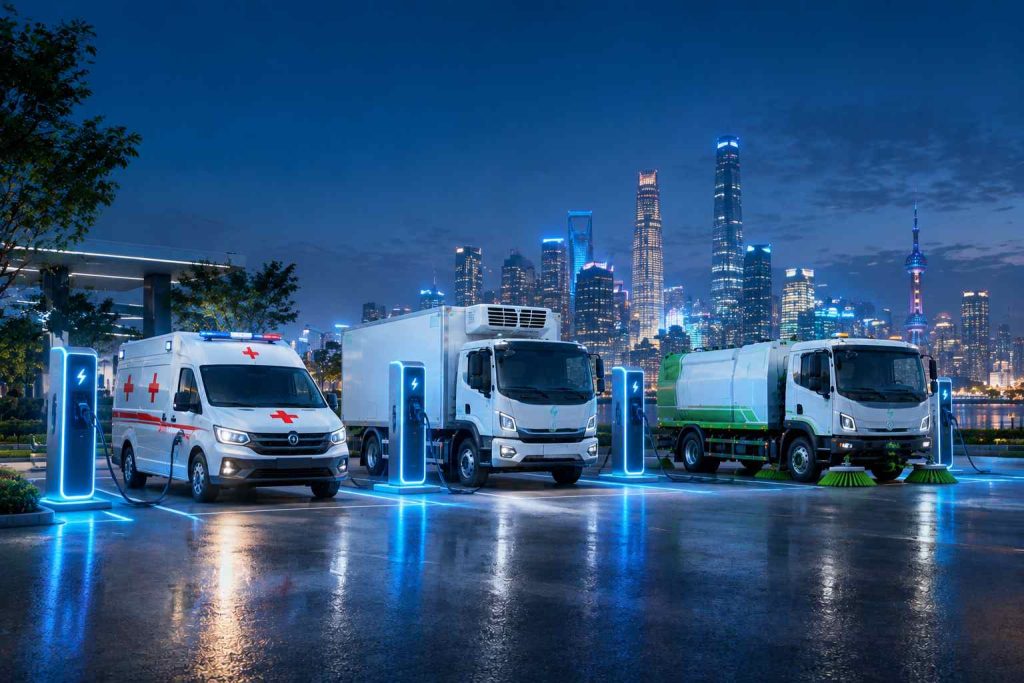
Electric special-purpose vehicles can also be configured for emergency response and rescue work. Common examples include:
- Electric rescue trucks
- Electric emergency vehicles
- Electric command vehicles
- Electric fire service vehicles
- Electric medical support vehicles
The exact configuration of an electric special-purpose vehicle depends on factors such as the equipment required, payload, working hours, and operating environment.
Electric Powertrain Options for Special Purpose Vehicles
Different commercial duty cycles may require different electric powertrain solutions.
Battery Electric
Battery electric vehicles use batteries as their main energy source and produce no tailpipe emissions during operation.
They are commonly considered for fixed-route applications such as waste collection, street sweeping, water spraying and facility maintenance, particularly when the vehicle can return to a depot for charging.
Range-Extended
A range-extended electric vehicle uses an electric drive system with an additional onboard energy source to extend operating range.
This type of configuration may be considered when the vehicle needs longer operating distances but full battery-electric operation is difficult because of route length or charging limitations.
Hybrid
Hybrid commercial vehicles combine electric drive with another power source. They can be considered for applications involving longer operating periods, variable routes or working conditions where battery-electric operation alone may not meet the duty cycle.
Fuel Cell
Fuel cell vehicles use hydrogen to generate electricity for the electric drive system. They may be considered for high-utilization commercial operations where longer operating range and fast refueling are important and hydrogen infrastructure is available.
How Electric Special Vehicles Differ from Passenger EVs?
Electric special-purpose vehicles are designed around commercial work.
Commercial Working Equipment
A garbage truck, sweeper or water truck needs energy for its working system as well as for driving. The battery and power system therefore need to be matched to the complete working cycle.
Payload and Gross Vehicle Weight
Commercial vehicles carry equipment, cargo, water or waste. The payload and gross vehicle weight directly affect energy consumption and vehicle selection.
Battery Capacity and Working Requirements
A larger battery is not automatically the right choice. Buyers should consider route distance, working hours, payload, equipment operation and charging conditions together.
Designed for Specific Commercial Applications
Electric special vehicles are built for defined applications. The chassis, body, battery system and working equipment need to work as one complete vehicle.
4 Key Technical Features of Electric Special Purpose Vehicles
1. Zero Tailpipe Emissions
Battery-electric vehicles do not produce tailpipe exhaust emissions during operation, which can be useful for urban, industrial and enclosed-site applications where reducing local exhaust emissions is important.
2. High Low-Speed Torque
Electric motors provide high torque from low speed, which is useful for commercial vehicles that frequently start, stop and operate at relatively low speeds.
3. Regenerative Braking
Regenerative braking can recover part of the vehicle’s kinetic energy during deceleration and return it to the battery.
This can be particularly useful for vehicles operating on routes with frequent stops, such as waste collection and street cleaning.
4. Lower Operating Noise
Electric powertrains generally produce less operating noise than conventional diesel powertrains. This can be beneficial for municipal cleaning, facility maintenance and other operations carried out in populated areas.
5. Electric Power for Working Equipment
Depending on the design, electric energy can also be used to operate pumps, sweepers, compactors and other specialized equipment. The energy demand of these systems should be included when calculating the required battery capacity.
Electric vs. Diesel: What About Operating Cost?
Purchase price is only one part of the cost comparison between electric and diesel special-purpose vehicles.
For an electric vehicle, buyers should consider:
- Electricity consumption
- Local electricity price
- Charging equipment and installation
- Battery capacity and expected service life
- Annual mileage
- Working hours
- Maintenance costs
- Brake wear
- Local diesel prices for comparison
Electric vehicles can reduce fuel costs and some routine powertrain maintenance because they do not use a conventional diesel engine in the same way. However, the actual economic benefit depends on the local electricity price, annual operating distance, battery configuration, duty cycle and charging conditions.
For export projects, it is useful to compare the total operating cost over several years, rather than comparing the initial vehicle prices only.
How to Choose an Electric Special Purpose Vehicle?
Application and Operating Conditions
Start with the actual job: waste collection, sweeping, water spraying, maintenance, cargo delivery or another commercial task.
Payload and Vehicle Size
Confirm the required payload, tank volume, body dimensions and equipment weight before selecting the chassis.
Daily Driving Distance
Record the normal daily mileage rather than using the maximum possible route distance. Traffic, terrain, payload and working equipment can all affect energy consumption.
Working Equipment
List every major piece of equipment, including pumps, compactors, brushes, cranes, refrigeration units or other systems.
Charging Infrastructure
Check where the vehicle will charge and what charging power is available. Depot charging is often easier to plan for fixed-route commercial vehicles.
Complete Duty Cycle
Consider the full working cycle:
Driving → loading/unloading → specialized work → waiting time → return trip → charging
This gives a more practical basis for selecting the battery, chassis and working system.
Questions Buyers Should Confirm Before Ordering
Before requesting a final configuration, buyers should prepare the following information:
- What is the main application?
- What payload or body capacity is required?
- How many kilometers will the vehicle travel each day?
- How many hours will it work per shift?
- What specialized equipment is required?
- What are the road and working conditions?
- Where will the vehicle operate?
- Where will it be charged?
- What charging power is available?
- What is the destination country and port?
- Are there any local vehicle, import or emissions requirements?
Providing these details allows the vehicle configuration to be matched more closely to the actual operating conditions.
Conclusion
Electric special vehicles are commercial work vehicles designed around specific applications. Their performance depends not only on the electric motor and battery, but also on the chassis, payload, working equipment, route, working hours and charging conditions.
For fixed-route applications with regular depot charging, battery-electric vehicles may be a practical option. Other commercial duty cycles may require range-extended, hybrid or fuel-cell solutions.
The best starting point is the actual working cycle. Confirm the application, daily mileage, payload, working hours, equipment and charging conditions first, then select the appropriate chassis and electric system.
Looking for an Electric Special Vehicle for Your Application?
We provide electric special vehicles configured for different commercial applications, including garbage trucks, street sweepers, water trucks, utility trucks, refrigerated trucks and more.
Contact us to discuss your requirements and find a suitable configuration for your market.
Frequently Asked Questions
What are the special features of electric vehicles?
Key features include electric propulsion, zero tailpipe emissions for battery electric vehicles, regenerative braking, high motor efficiency, lower operating noise and reduced conventional powertrain maintenance.
Are electric special vehicles suitable for heavy-duty applications?
They can be suitable for many medium- and heavy-duty applications, particularly where routes are predictable and charging infrastructure is available. The appropriate configuration depends on payload, working equipment, operating distance, terrain and duty cycle.
How do I choose an electric special purpose vehicle?
Start with the application and working conditions. Then determine the required payload, gross vehicle weight, wheelbase, daily mileage, battery capacity, charging requirements and specialized equipment.
Can the body equipment also use electric power?
Yes. Depending on the vehicle design, equipment such as pumps, compactors and sweeping systems can use electric motors, electric PTOs or electro-hydraulic systems.
