

Electric tow trucks are becoming an option for roadside assistance companies, vehicle recovery operators, and commercial fleets looking to reduce fuel consumption and tailpipe emissions. But are they suitable for your business?
The answer depends on more than battery capacity or purchase price. Daily mileage, recovery equipment, payload, charging access, and local electricity costs all affect whether an electric recovery truck is a practical investment.
This guide explains what buyers should evaluate before purchasing, how electric and diesel models compare, and how to select a configuration that meets your operational requirements.
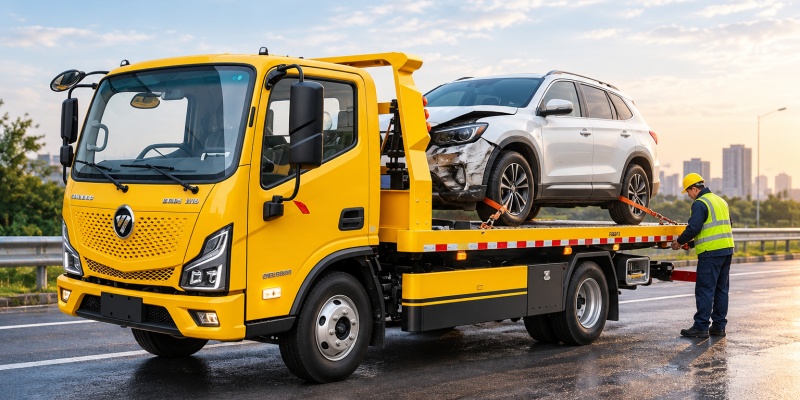
Table of Contents
Quick Takeaways: Is an Electric Tow Truck Right for You?
- Urban recovery operations: Battery-electric models are worth considering when routes are predictable, and vehicles can charge regularly at a depot.
- Long-distance recovery: Diesel models may offer greater operational flexibility when charging infrastructure is limited or vehicles must work continuously across large areas.
- Battery selection: Choose a battery based on daily energy demand, operating conditions, and charging opportunities—not simply the largest available capacity.
- Vehicle configuration: The chassis, recovery body, hydraulic equipment, and payload must be matched before comparing prices.
- Cost comparison: Calculate total cost of ownership (TCO), including purchase price, energy, maintenance, charging infrastructure, and downtime.
These are initial screening principles rather than universal rules. The right configuration depends on the specific vehicle and working conditions.
What Is an Electric Tow Truck?
An electric tow truck uses an electric drivetrain and rechargeable battery to power the vehicle. Depending on its design, it may carry a flatbed platform, wheel-lift system, hydraulic boom, or other specialized recovery equipment.
Battery-electric models produce no tailpipe emissions while driving. They can be particularly attractive for urban roadside assistance, fleet services, and vehicle transportation within defined service areas.
Three common configurations include:
- Flatbed tow trucks: Load the entire vehicle onto a platform, making them suitable for transporting cars and other vehicles within the truck’s rated capacity.
- Wheel-lift tow trucks: Lift one end of a vehicle for roadside assistance and short-distance recovery.
- Boom-equipped wreckers: Use lifting and recovery equipment for more demanding operations, subject to the truck’s rated capacities.
Buyers should also distinguish between battery-electric and plug-in hybrid models. A plug-in hybrid combines electric propulsion with an internal combustion engine, while a battery-electric vehicle relies on its battery for propulsion. Their operating costs, range characteristics, and charging requirements differ.
Battery Capacity and Real-World Driving Range
Battery capacity is one of the most important considerations when choosing an electric recovery truck. However, the battery’s rated capacity alone cannot tell you whether the vehicle can complete a full working day.
Actual energy consumption depends on vehicle weight, road gradients, traffic, temperature, driving style, and the frequency of recovery operations. Hydraulic equipment may also consume energy, depending on how the system is designed and powered.
How should you calculate the required range?
Start with three questions:
- How many kilometers does the vehicle typically travel each day?
- How much energy does it consume under the expected working conditions?
- Can it recharge during scheduled downtime or overnight?
A useful starting point is to estimate daily energy demand:
Daily energy demand = Daily distance × Average energy consumption per kilometer
The result should then be adjusted for operating conditions, charging losses, and an appropriate reserve. The reserve should reflect the variability of actual routes and the availability of charging facilities.
For example, a vehicle that returns to its depot every evening may work well with a different battery configuration from one that covers unpredictable routes across several cities.
A practical purchasing tip: Request both the manufacturer’s rated range and supporting information about the test conditions. Where possible, evaluate the proposed configuration under a representative workload rather than relying exclusively on a published maximum range.
Cold weather, heavy loads, and frequent stops can reduce the available range. Buyers operating in regions with extreme temperatures should discuss these conditions with the manufacturer before finalizing the battery configuration.
Chassis and Recovery Equipment: Why Matching Matters?
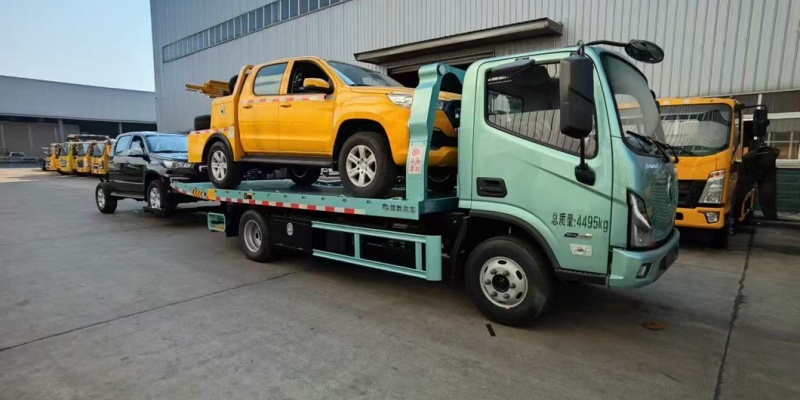
A suitable electric tow truck is not simply an electric chassis with a recovery body installed on top. The complete vehicle must be engineered to handle both road operation and recovery work safely.
Important specifications include:
- Gross vehicle weight rating (GVWR)
- Curb weight and remaining payload
- Front and rear axle ratings
- Wheelbase and overall dimensions
- Motor power and drivetrain performance
- Flatbed, wheel-lift, or boom capacity
- Hydraulic system specifications
- Braking and stability systems
Pay attention to the finished vehicle weight
One common configuration issue is evaluating the chassis payload before accounting for the complete recovery body.
The flatbed, hydraulic equipment, winch, accessories, and other installed components all contribute to the final vehicle weight. The remaining payload must be sufficient for the intended operation, while axle loads must remain within their approved limits.
Buyers should therefore request the specifications of the completed vehicle, not just the bare chassis.
Choose equipment according to the recovery task
A flatbed model may be appropriate for transporting passenger cars, while a wheel-lift configuration may better suit certain urban recovery operations. Heavier vehicles or more complex recovery tasks may require specialized equipment and a different chassis.
The correct choice depends on the actual vehicle weights and recovery procedures involved. Advertised motor power alone does not establish a truck’s safe lifting or recovery capacity.
For customized vehicles, the chassis and superstructure supplier should confirm compatibility before production.
Electric Tow Truck vs. Diesel Tow Truck: Which Is More Practical?
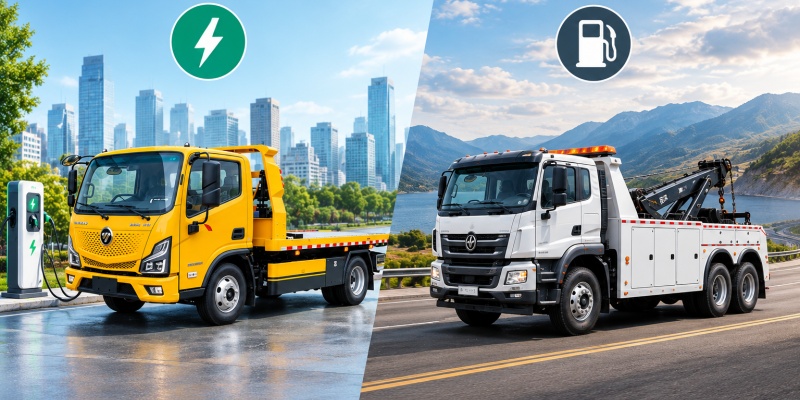
Electric and diesel recovery trucks serve different operating needs. Instead of asking which powertrain is universally better, buyers should identify which one fits their daily workload.
| Decision factor | Battery-electric model | Diesel model |
|---|---|---|
| Urban operation | Attractive for predictable routes and suitable charging access | Suitable for urban and mixed operations |
| Long-distance work | Depends on usable range and charging availability | Often more flexible where refueling is readily available |
| Energy cost | Depends on electricity tariffs and consumption | Depends on fuel prices and consumption |
| Routine powertrain maintenance | Generally fewer engine-related service requirements | Requires engine and fuel-system maintenance |
| Exhaust emissions | No tailpipe emissions during operation | Produces exhaust emissions |
| Initial investment | Depends on vehicle and battery configuration | Depends on vehicle specification and market |
| Infrastructure | Requires compatible charging arrangements | Requires access to diesel fuel |
When does electric make financial sense?
A battery-electric model is worth evaluating when the vehicle has relatively predictable mileage, returns to a charging location, and operates where electricity is competitively priced.
For a fleet with high annual utilization, lower energy and maintenance expenses may offset a higher initial purchase price. However, this must be demonstrated through a cost calculation rather than assumed.
For long-distance or unpredictable recovery work, a diesel vehicle may remain the more practical choice if charging would introduce significant downtime.
Plug-in hybrid models may also be worth considering where available, particularly when the buyer needs electric operation for some routes but cannot rely entirely on charging infrastructure.
How to Compare Total Cost of Ownership (TCO)?
Purchase price alone is not enough to determine which recovery truck offers better value.
A useful TCO comparison should cover the expected ownership period and include:
- Initial vehicle purchase price
- Electricity or diesel consumption
- Charging equipment and installation
- Scheduled maintenance and repairs
- Battery warranty and potential replacement costs
- Insurance, financing, and taxes where applicable
- Downtime and vehicle availability
- Expected resale value
A simple energy-cost comparison can be calculated as follows:
Electric energy cost per kilometer
Average electricity consumption per kilometer × Electricity price per kWh
Diesel fuel cost per kilometer
Diesel consumption per 100 km ÷ 100 × Diesel price per liter
These calculations compare energy expenses only. A complete TCO model must also account for the other costs listed above.
For fleet operators, using actual electricity tariffs, fuel invoices, maintenance records, and annual mileage will produce a more meaningful result than relying on generic savings percentages.
If reliable operating data is not yet available, request estimates from the supplier and label them as assumptions. Compare multiple usage scenarios before making a purchasing decision.
Charging Infrastructure and Daily Operations
Charging arrangements directly affect how much work an electric recovery truck can complete each day.
Before ordering, determine whether the vehicle will charge overnight at a depot, during scheduled breaks, or through public charging facilities.
Check the following:
- Compatible charging connector and charger type
- Available electrical capacity at the operating location
- Charging power supported by the vehicle
- Expected charging time under normal conditions
- Availability of backup charging options
- Daily operating schedule and acceptable downtime
A high-power charger may shorten charging time, but only if the vehicle supports that charging rate and the site has sufficient electrical capacity.
Buyers should also confirm whether the recovery equipment draws power from the traction battery or uses a separate power arrangement. This affects energy planning and should be clarified for the specific configuration.
For international projects, charging compatibility deserves particular attention. Voltage, frequency, connector standards, and local infrastructure can vary between markets.
What Should International Buyers Check Before Importing?
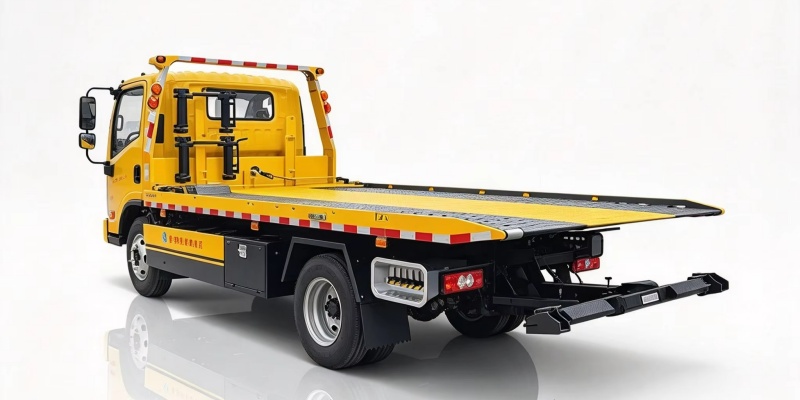
Importing an electric recovery truck involves more than confirming its technical specifications and FOB price.
Before placing an order, international buyers should verify:
Vehicle approval and registration: Confirm the applicable vehicle classification, technical requirements, and registration procedures in the destination market.
Battery and charging compatibility: Check the charging system, electrical requirements, and any relevant battery transport or safety documentation.
Final vehicle configuration: Confirm the chassis, recovery body, payload, dimensions, and rated capacities of the completed vehicle.
Warranty and after-sales support: Clarify battery and vehicle warranty coverage, spare parts availability, and arrangements for technical support.
Quotation scope: Establish whether the quotation covers the complete vehicle, export documentation, shipping, and any additional certification or destination-country costs.
A professional supplier should be able to explain the proposed configuration and identify which documents are available. Requirements that depend on the destination country should be verified before the order is finalized.
Conclusion
Electric tow trucks offer a modern solution for vehicle recovery businesses seeking to reduce tailpipe emissions, improve urban operating efficiency, and potentially lower energy and maintenance costs.
However, the right model depends on more than battery capacity or motor power. Recovery equipment, chassis strength, payload, driving range, charging infrastructure, and total cost of ownership must all be considered.
For roadside assistance companies, fleet operators, and international distributors, selecting the right configuration and working with a reliable manufacturer are essential steps toward a successful investment.
Looking for an electric tow truck for your business?
CLW provides specialized vehicle solutions for international markets. Contact our team to discuss your required recovery capacity, battery specifications, chassis configuration, and intended application.
Request a quotation to explore suitable electric tow truck options for your market.
Frequently Asked Questions
How far can an electric tow truck travel on one charge?
The driving range depends on battery capacity, vehicle weight, road conditions, temperature, and driving habits. Buyers should distinguish between the manufacturer’s rated range and the actual working range under loaded operating conditions.
Are electric tow trucks cheaper to operate than diesel models?
They can offer lower energy and routine maintenance costs, particularly in urban fleets. However, the overall savings depend on electricity prices, purchase cost, annual mileage, charging infrastructure, and battery warranty.
Can an electric tow truck recover electric cars?
Yes. The recovery vehicle must have sufficient capacity and appropriate equipment. Operators should follow the recovered vehicle manufacturer’s instructions, especially when dealing with damaged high-voltage systems or potentially damaged batteries.
What should international buyers check before importing an electric tow truck?
Buyers should verify vehicle specifications, recovery capacity, charging compatibility, warranty terms, technical documentation, and the applicable import and registration requirements in the destination country.
