





Aerial platform truck selection is never just about height. For fleet managers, contractors, and municipal buyers, the question is balancing between reach, safety, and maneuverability across diverse job sites. The inapplicable aerial work platform truck can result in lower efficiency, higher operating risk, and potential costs.
Now, let’s find out S-Type vs. Z-Type Aerial Platform Truck.
The article presents a clear, experience-based comparison of straight-arm (S-type) and folded-arm (Z-type) aerial platform trucks, using 17-meter-height class truck-mounted aerial platforms as a reference. By going through this, you will discover which configuration best suits the exact operating conditions—and why.
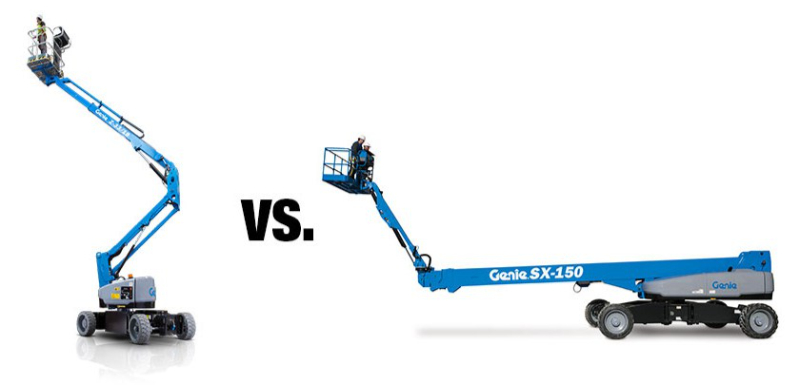
Table of Contents
What Is the Aerial Platform Truck?
An aerial platform truck is a vehicle-mounted lifting system that allows personnel to safely access elevated work areas, also known as truck mounted aerial work platform. The heart of the truck is the hydraulic boom, which enables the functions of extending, outreaching, and rotating.
From a structural perspective, most truck-mounted aerial platforms fall into two main categories:
· Straight arm aerial platform truck (S-type aerial platform truck / telescopic)
· Folded arm aerial platform truck (Z-type aerial platform truck / articulating)
Understanding the mechanical difference between these two types is essential before making a purchase decision.
Straight Arm (S-Type): Maximum Reach and Stability

A straight arm aerial platform truck, also known as a telescopic aerial platform truck, uses multiple nested boom sections that extend linearly. This design prioritizes distance and rigidity.
Advantages of S-Type Aerial Platform Trucks
· Outstanding horizontal reach
Straight arm designs deliver superior outreach. In the 17-meter class, horizontal reach can exceed 11 meters, making them ideal for long-distance access.
· High structural stability
The linear boom structure minimizes deflection, which improves safety during high-altitude or windy operations.
· Fast and simple positioning
Fewer joints mean quicker setup for straight-up or straight-out tasks.
Applications:
· Highway and road signage installation
· Bridge inspection and maintenance
· Power and telecom line construction
· Large open construction sites
For buyers focused on height, distance, and load stability, the telescoping aerial platform truck remains the most efficient solution.
Folded Arm (Z-Type): Flexibility & Obstacle Clearance

The folded arm aerial platform truck featuring multiple joints allows the arm to bend and reposition.
Advantages of Z-Type Aerial Platform Truck
· Exceptional mobility
The Z-shaped design allows operators to raise up and over obstacles such as walls, roofs, pipes, or vehicles.
· Superior performance in narrow spaces
Direct positioning in constrained areas: urban streets, industrial plants, and complex work environments.
· Simple operation
The Z-type model makes it easy to change work angles without redeploying the chassis.
Applications:
· Urban streetlight and traffic signal maintenance
· Industrial plant servicing
· Facility and warehouse maintenance
· Municipal and city utility projects
When agility matters more than maximum reach, the folded arm aerial platform truck is the clear winner.
S-Type vs. Z-Type Aerial Platform Truck: Technical Differences
Here is a brief comparison that highlights the technical trade-offs between the two:
· Maximum working height: Nearly identical (around 17.5–17.6 m)
· Maximum outreach: S-type offers significantly longer outreach
· Boom structure: Telescopic (S-type) vs articulating joints (Z-type)
· Rated platform load: Typically, 200 kg for both
· Control systems: CAN bus and proportional hydraulic controls on both
· Outriggers: H-type outriggers for stable operation
How to Choose: S-Type vs. Z-Type Aerial Platform Truck?
Here is the general comparison of S-Type vs. Z-Type aerial platform truck for selection:
Choose a Straight Arm (S-Type) If You Need:
· Long horizontal outreach
· High stability at maximum height
· Open job sites with minimal obstacles
Choose a Folded Arm (Z-Type) If You Need:
· Obstacle clearance capability
· Operation in narrow or crowded environments
· Flexible working angles without repositioning
This checklist also applies to selecting emergency machinery like an aerial platform fire truck, whether comparing an articulating aerial platform fire truck or a telescoping aerial platform fire truck.
Shared Advantages of Modern Aerial Work Platform Trucks

Regardless of boom type, high-quality aerial work platform trucks share several critical features:
· Enhanced operator safety, including hydraulic emergency descent systems designed to meet global safety standards such as ANSI/SAIA A92.2.
· Precise proportional control, reducing vibration and fatigue.
· Reliable truck chassis, ensuring stability at rated load capacity.
These shared systems ensure consistent performance across both straight-arm and folded-arm aerial platform trucks.
Conclusion: Reach vs. Agility Defines Performance
In short, the straight-arm designs excel in distance and stability, while folded-arm designs dominate complex, obstacle-heavy environments. However, the decision comes down to your major operation scenario.
Ready to optimize your crew with the best choice?
Contact our sales team today for a tailored solution based on your real-world operating problems.