

How to choose a comfortable ambulance during a long-distance patient transfer? A smooth ride, a secure stretcher, and enough room for medical staff may seem like basic requirements, but they can make a significant difference during transportation. Poor suspension, unstable equipment, or inadequate ventilation can create unnecessary discomfort and make medical work more difficult.
Modern ambulance design needs to consider more than vehicle performance. It should balance patient comfort, transportation safety, and medical staff efficiency. Let’s look at the design details that matter most when choosing an ambulance.

Table of Contents
Why Patient Comfort Matters During Ambulance Transport?
Patient comfort is not simply about making the journey pleasant. It also affects how medical staff work and how patients experience transportation.
Consider a patient who needs a two-hour transfer between hospitals. Road vibrations, sudden movements, and an uncomfortable resting position may increase physical discomfort. At the same time, medical staff need a stable working environment to monitor the patient and access essential equipment.
Three factors deserve particular attention:
- Patient experience: Stable positioning and suitable temperature help reduce unnecessary discomfort.
- Medical staff efficiency: A practical interior layout makes it easier to reach patients and medical equipment.
- Transportation safety: Reliable stretcher locks and secure equipment mounts help prevent unwanted movement.
In our view, ambulance comfort should start with the vehicle’s overall design, not with additional interior accessories.
Five Design Factors That Make a Difference
1. Suspension: More Than Just Driving Comfort
Suspension plays an important role in ride comfort in ambulances, especially on uneven roads and during long-distance transfers.
For example, a vehicle with poor shock absorption may transmit more road vibration into the patient compartment. This can make the journey uncomfortable for patients with fractures, back injuries, or limited mobility.
When comparing suspension systems, buyers may consider:
- Steel leaf springs: A common option in commercial vehicle chassis, with a relatively simple structure and practical maintenance.
- Air suspension: Can provide adjustable ride height and better control of ride characteristics when properly designed and configured.
However, air suspension does not automatically guarantee a better ambulance. Buyers should evaluate the complete chassis, suspension tuning, vehicle load, and actual road conditions.
2. Stretcher Stability and Locking System
The stretcher is one of the most important components inside an ambulance.
A comfortable mattress matters, but the mounting and locking system deserve equal attention. An unstable stretcher can move during braking or turning, creating safety concerns and making medical procedures more difficult.
Before purchasing, check:
- Whether the locking mechanism secures the stretcher firmly.
- Whether the stretcher allows convenient height and backrest adjustments.
- Whether the loading system supports safe patient handling.
- Whether the stretcher meets the required load capacity.
A reliable stretcher system should support both patient positioning and safe transportation.

3. Interior Space: Give Medical Staff Room to Work
A spacious patient compartment does more than improve comfort. It determines how easily medical staff can move around the patient.
A poorly planned layout may force staff to reach across equipment or work in uncomfortable positions.
Pay attention to:
- Interior height and headroom.
- Side clearance around the stretcher.
- Seating positions for medical personnel.
- Storage cabinet placement.
- Access to medical equipment.
Buyers should evaluate the usable interior dimensions rather than relying only on the vehicle’s external dimensions.
4. Ventilation and Temperature Control
The patient compartment needs reliable air conditioning and ventilation, particularly in regions with high temperatures.
Poor airflow can make the interior uncomfortable. It may also affect temperature-sensitive medical supplies and electronic equipment.
A suitable system should provide:
- Consistent cooling performance.
- Effective air circulation.
- Convenient temperature adjustment.
- Practical air outlet positions.
For buyers in tropical or desert climates, climate control deserves particular attention during vehicle selection.
5. Noise and Interior Equipment Installation
Engine noise, road noise, and loose interior fittings can affect the transportation experience.
Manufacturers should consider sound insulation, equipment mounting, and interior material selection during vehicle development.
Secure installation matters just as much as equipment quality. Medical cabinets, oxygen cylinders, and electronic devices need suitable mounting systems to prevent unwanted movement during travel.
Different Ambulance Applications Require Different Comfort Features
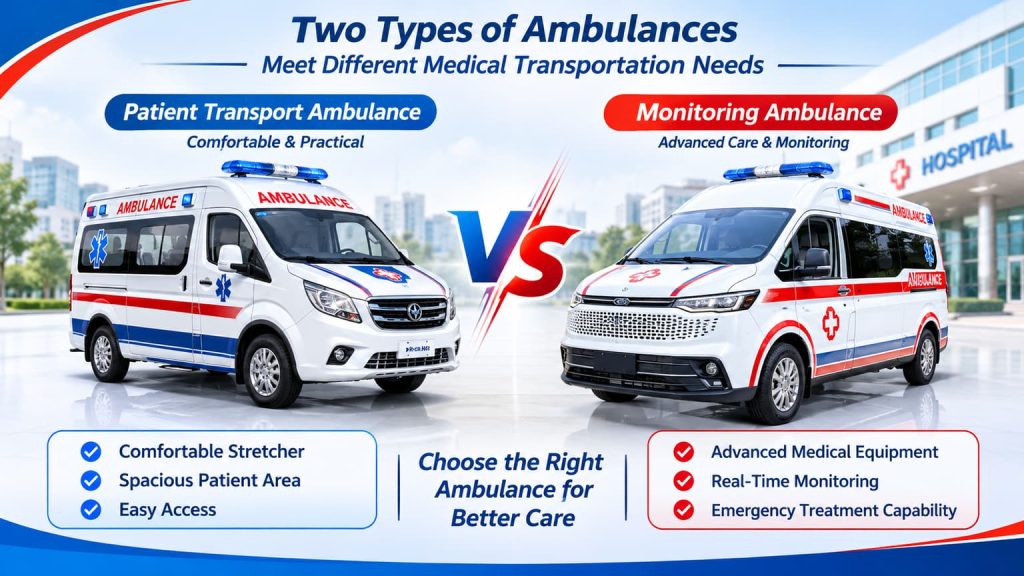
Not every ambulance serves the same purpose. Buyers should match the interior design to their actual medical transportation needs.
| Ambulance Type | Main Design Priorities |
|---|---|
| Patient Transport Ambulance | Comfortable stretcher, easy access, sufficient patient space |
| Monitoring Ambulance | Advanced medical equipment integration, monitoring access, organized workspace |
For routine hospital transfers, a practical layout and comfortable stretcher may matter most.
Emergency ambulances need faster access to medical equipment, while intensive care ambulances require more space for monitoring devices and medical procedures.
The best configuration depends on the medical service, not simply the number of features installed.
Why Customization Matters in Modern Ambulance Manufacturing?
Different countries have different road conditions, medical service requirements, and equipment preferences. A standard configuration may not suit every customer.
For example, a hospital that mainly handles inter-hospital transfers may prioritize stretcher comfort and storage space. An emergency service provider may need more advanced medical equipment and convenient access to essential supplies.
At the manufacturing stage, buyers should discuss:
- Chassis and engine options.
- Patient compartment dimensions.
- Stretcher systems.
- Medical equipment configuration.
- Electrical systems and climate control.
- Local certification requirements.
At CLW Group, we understand that ambulance projects require different configurations for different markets. Matching the vehicle design to the customer’s actual operating needs is more important than simply adding more features.
What’s Next: How To Choose A Comfortable Ambulance
A comfortable ambulance starts with the right combination of chassis performance, suspension, stretcher stability, interior space, and medical equipment layout. These details become even more important during long-distance patient transfers.
Before choosing a vehicle, take time to evaluate its actual configuration and consider the conditions in which your medical team will use it.
If you are planning to purchase a comfortable ambulance for your hospital, emergency service, or distribution business, you can contact CLW Group to discuss your project and request a customized quotation.
Frequently Asked Questions
1. What makes an ambulance comfortable?
A comfortable stretcher, good suspension, proper ventilation, and sufficient interior space all improve patient comfort.
2. What equipment does a modern ambulance need?
Common equipment includes stretchers, oxygen systems, medical cabinets, and patient monitoring devices.
3. Can ambulance manufacturers customize the interior?
Yes. Manufacturers can customize interior layouts, medical cabinets, lighting, and medical equipment.
4. How do I choose the right comfortable ambulance?
Consider your medical needs, chassis performance, road conditions, equipment requirements, and after-sales service.
