

Buying a refrigerated truck for Africa is a high-stakes decision. If the cooling system fails on a hot, rough route, you lose the load, the customer, and the profit. This guide gives you 10 practical checks to make before you order, so you get a refrigerated truck that can hold temperature under real African conditions.
We built this list around the four factors that matter most on African routes: extreme heat, rough roads, spare parts availability, and running costs. It also draws on 16 years of experience building special-purpose vehicles at Chengli in Suizhou, China.
The demand is clear. Industry estimates cited by the U.S. International Trade Administration show that Nigeria alone needs at least 25,000 refrigerated trucks but currently has fewer than 1,000. Growing supermarket and fast-food chains across East Africa are adding further pressure on the cold chain.
Here are the 10 checks, ranked in the order we recommend you ask them.
Table of Contents
1. Match the Cooling Unit to African Heat
The cooling unit is the heart of any reefer truck. Tell the supplier your highest ambient temperature, cargo type, target temperature, and how often the doors will open. A unit sized for mild climates will struggle at midday on long African routes.
Ask for the exact brand, model, and temperature range. Prefer established brands such as Thermo King or Carrier, which have better parts and service networks in many African countries.
2. Check the Insulated Box Quality
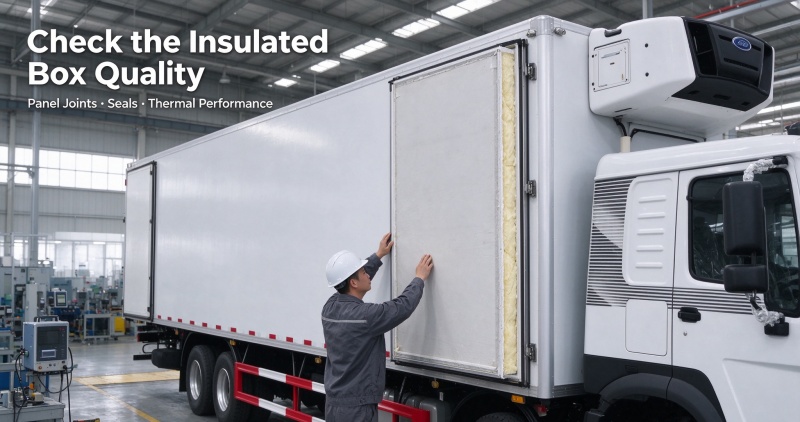
Most cold loss comes from the box, not the unit. Ask about panel material, insulation type and density, and how the joints are bonded. At CLW, our box workshop uses composite-panel forming, CNC 5-axis shaping, and laser cutting and welding to keep panels accurate and seams tight.
A well-built box reduces the workload on the cooling unit and helps maintain temperature more consistently.
3. Inspect Door Seals and Drainage
Door gaps are the most common source of temperature loss. Ask how many seal layers the doors have and whether condensation can drain properly from the box. Standing water leads to floor corrosion, while ice can block airflow.
Good seals and effective drainage protect both the cargo and the long-term condition of the box.
4. Choose a Strong Chassis and Subframe
African roads put heavy stress on every weld and joint. Ask about the chassis brand, engine, and gearbox. Also ask how the subframe is attached to the chassis — weak welding often cracks after months of vibration and rough terrain.
A strong chassis and properly engineered subframe mean fewer breakdowns and less time off the road.
5. Get the Size and Payload Right
Check the internal box dimensions, payload capacity, and curb weight carefully. A lighter truck can legally carry more cargo.
| Your Use | Suitable Type | Key Considerations |
|---|---|---|
| City delivery to shops, restaurants, supermarkets | Light refrigerated truck or van | Easy to drive, frequent stops, lower running cost |
| Wholesale and regional distribution | Medium refrigerated truck | Balance of payload and operating cost |
| Long-distance transport of frozen or fresh goods | Heavy refrigerated truck | Strong chassis, reliable unit for long hours |
| Urban last-mile with charging access | Electric refrigerated truck | Low running cost and quiet operation; plan around range |
Choosing the right size improves cargo volume per trip and lowers cost per delivery.
6. Decide Between Diesel and Electric
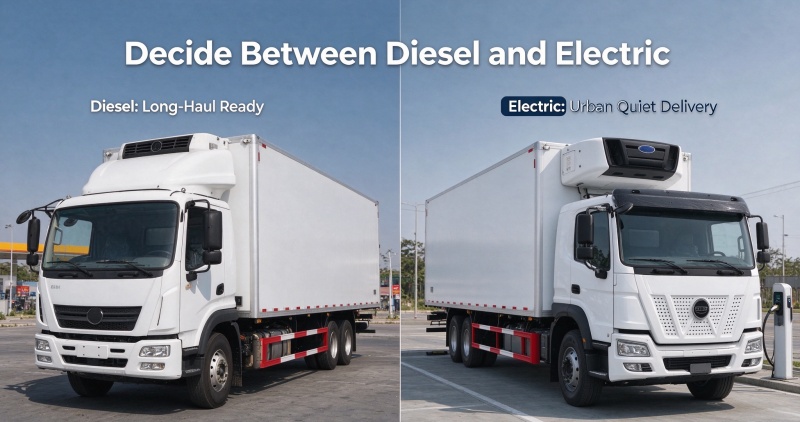
Diesel remains the practical choice for most long routes and areas with limited charging infrastructure. An electric refrigerated truck can work well for city last-mile delivery where reliable charging is available. It offers lower running costs and quieter operation, but range is still limited. For longer distances or less developed regions, diesel is usually the safer option.
7. Confirm Left-Hand or Right-Hand Drive
Steering side must match local regulations. Nigeria and Ghana normally require left-hand drive. Kenya, Tanzania, Uganda, and Zambia normally require right-hand drive. Confirm the correct configuration with both your supplier and your import rules before placing an order.
Ordering the wrong steering side can lead to expensive modifications and registration delays.
8. Plan for Spare Parts and After-Sales Service
A reefer truck for Africa is only valuable when it stays on the road. Ask for a spare-parts list with prices (especially door seals, fans, and door hardware). Request separate warranty terms for the box and the cooling unit, and ask how quickly the supplier responds to fault reports.
Fast support and available parts directly reduce downtime and lost trips.
9. Check Import Documents Early
Import requirements vary by country. Ask your supplier which documents they can provide (such as CoC or PVoC) and confirm the exact requirements with your local clearing agent. Early verification is far cheaper than solving problems after the truck arrives at the port.
10. Agree on Shipping Terms and Payment
Request a clear quotation on FOB or CIF terms to your destination port and confirm exactly what is included. Get the deposit amount, balance payment terms, and delivery timeline in writing.
Clear commercial terms help you calculate the real landed cost with no surprises.
Why Buy a Refrigerated Truck from Chengli?
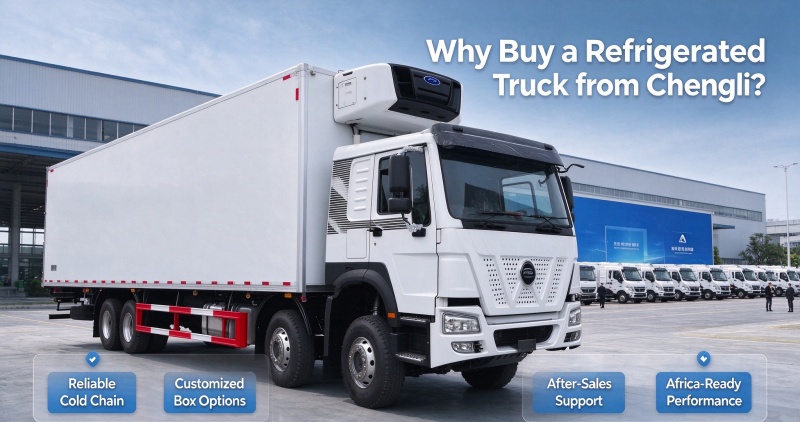
CLW has built special-purpose vehicles in Suizhou, China, for 16 years and has served more than 30,000 end users. We operate a dedicated refrigerated-box workshop with over 20 sets of equipment, from composite-panel forming to laser cutting and welding. Accurate panels and consistent seams help reduce deformation, poor sealing, and rapid insulation loss. We pair our boxes with established cooling units such as Thermo King and Carrier, and we provide clear FOB or CIF quotations tailored to your cargo, route, and climate.
Frequently Asked Questions
How much does a refrigerated truck cost?
The price depends on the truck size, chassis, cooling unit, box specification, options, and shipping terms. Send us your cargo, route, payload, steering side and destination port, and we will prepare an accurate quotation.
Which refrigerated truck is best for city delivery?
A light refrigerated truck or van suits frequent stops in the city. If you have reliable charging, an electric model can cut your running costs.
Can I use an electric refrigerated truck in Africa?
Yes, for city last-mile delivery where charging is available. Range is limited, so diesel is usually the better choice for long routes.
How do I avoid problems when importing?
Check the import documents, steering side and shipping terms before you pay a deposit. Work with a local clearing agent who knows your port and your country’s rules.
What’s Next: Choose Your Refrigerated Truck for Africa
You now have the 10 key checks. Start with the cooling unit, box quality, and chassis—these largely determine how well the truck holds temperature and how long it lasts. Then confirm spare parts support, import documents, and shipping terms before paying a deposit.
Not sure which configuration fits your routes?
Tell us your cargo and temperature, route and conditions, payload, steering side, port, and chassis preference—we’ll come back with written answers and a truck configuration for Africa.
