

Cleaning septic tanks, grease traps, and sedimentation tanks is messy, slow, and costly. A standard vacuum tanker fills up fast, then drives away with wet sludge that can leak on the road. You pay for every trip, and the problem simply moves somewhere else. A 4×2 Sewage Suction and Purification Truck treats sewage and sludge right where you work. It sucks, separates, doses, and dewaters on one vehicle, so the sludge does not have to travel wet. For buyers, the vacuum pump is only part of the picture. Sludge type, working hours, power supply, discharge rules, and local site conditions all affect the right configuration.
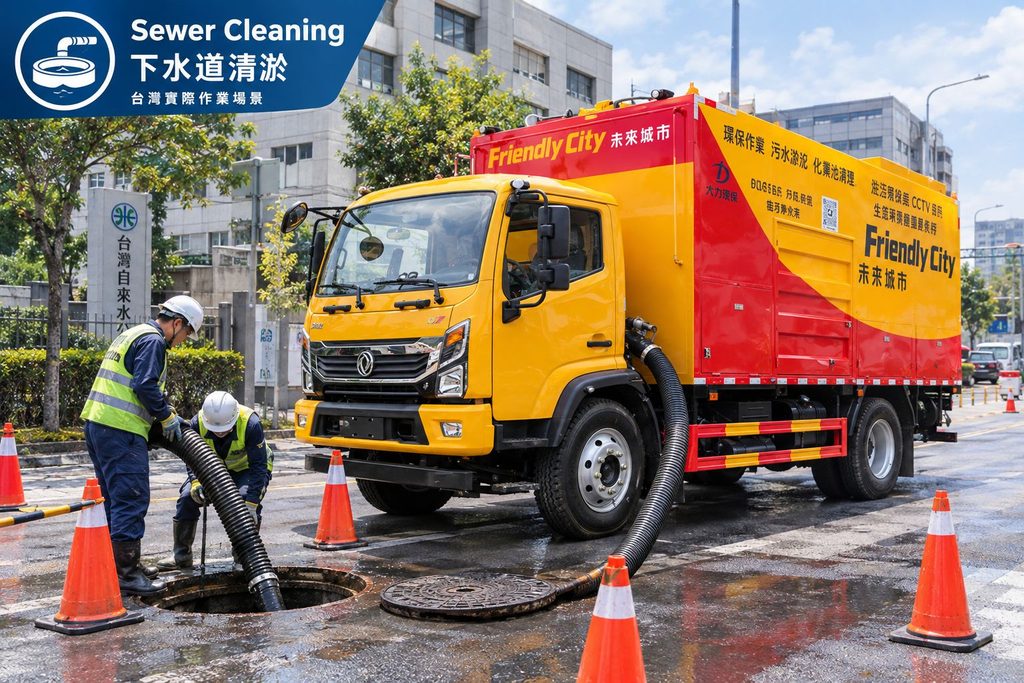
This guide explains how the truck works, what makes it different from a traditional tanker, and how to choose the right specification for your market.
Table of Contents
What Is a Sewage Suction and Purification Truck
A sewage suction and purification truck is a special-purpose vehicle that collects sewage and sludge and treats it on site. It is also called a sludge dewatering truck, a mobile sewage purification truck, or a sewage suction truck with dewatering.
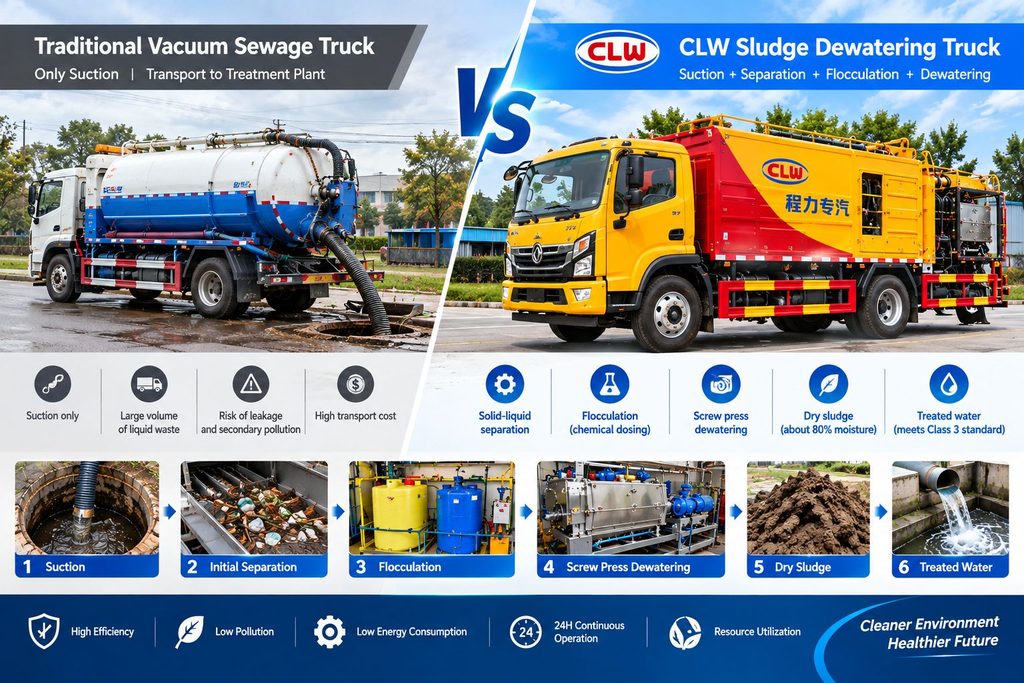
The main difference from a standard vacuum tanker is the treatment system. A tanker mainly transports waste. A purification truck processes it before you leave the site.
More Than a Vacuum Tanker
A standard tanker stores what it sucks. A purification truck adds these functions:
- Solid separation to remove large debris
- Automatic flocculant dosing to gather fine particles
- Screw press dewatering to produce dry sludge cake
- Treated water output that meets the third-level discharge standard for municipal sewer networks
A Chassis Plus a Treatment System
The truck has two main parts. The Dongfeng Duolika D7 chassis provides the driving system. The stainless steel upper body holds the vacuum, separation, dosing, and dewatering equipment. Both must be matched to work as one complete vehicle.
Why Traditional Sewage Trucks Fall Short
Most sewage trucks only collect and haul. This creates three common problems.
High Transport Costs
Every full tank means a trip to a disposal site. More trips mean more fuel, labor, and waiting time.
Leakage and Secondary Pollution
Wet sludge can drip during loading, driving, and unloading. This pollutes roads and can lead to complaints and fines.
Tank Volume Limits
When the tank is full, work stops. Large septic tanks or sedimentation tanks may need several visits.
A 4×2 Sewage Suction and Purification Truck is designed to remove these three problems at the source.
How the 4×2 Sewage Suction and Purification Truck Works
The truck combines five steps on one vehicle.
Step 1: Suction
An 11 KW vacuum system pulls sewage and sludge directly from septic tanks, grease traps, and other sources. No extra pumping equipment is needed.
Step 2: Solid Separation
A 998 patented cutter-type separator removes plastic bags, branches, stones, and other large debris. This protects the equipment and helps the truck handle complex conditions.
Step 3: Automatic Flocculation
The system doses flocculant automatically. Fine particles clump together, which makes dewatering faster and more stable.
Step 4: Twin Screw Press Dewatering
The sludge enters the 402 dual-spindle twin screw press. Double screw extrusion squeezes out water. The screw plates clean themselves and resist clogging, so the machine suits difficult sludge.
Step 5: Dry Sludge Cake and Treated Water
The output is dry sludge cake with about 80% moisture content. The treated water meets the third-level discharge standard for municipal sewer networks.
Typical deployment: The truck parks beside a septic tank, connects to power, and starts suction. Sludge is separated, dosed, and dewatered as it comes in. The crew collects dry sludge cake instead of hauling wet sludge away.
8 Key Features of a Mobile Sewage Purification Truck
1. Dongfeng Duolika D7 Chassis
The truck uses the Dongfeng Duolika D7 chassis with a 3800 mm wheelbase, a Yuchai 170 HP engine, and an 8-speed transmission. It offers stable power, good maneuverability, and easy maintenance.
The 4×2 layout is compact. It suits narrow city streets and rural roads.
2. 11 KW Vacuum Suction System
The high-power vacuum system handles septic tanks, grease traps, and other waste sources directly.
3. Patented Cutter-Type Solid Separator
Large debris is removed before dewatering. This reduces blockage risk and protects downstream equipment.
4. Twin Screw Press with Self-Cleaning Plates
The dual-spindle design offers high throughput. The self-cleaning, anti-clogging screw plates suit complex working conditions.
5. Dual Power Supply and Low Noise
You can connect to 380V external power or use the onboard 50 KW generator. The truck runs at low speed, so noise, vibration, and energy use stay low.
It can work continuously for 24 hours in one spot, and it is not limited by tank volume.
6. 304 Stainless Steel Body
The whole upper body is 304 stainless steel. It offers high strength and strong corrosion resistance in harsh sewage conditions.
7. Schneider PLC Automation
A Schneider PLC control cabinet automates the process. No dedicated operator needs to watch the equipment all day. This reduces labor and sludge transport costs.
8. Built-in High-Pressure Washing System
A 3 m³ clean water tank and a high-pressure pump support pipe dredging and equipment self-cleaning. One truck covers more jobs.
6 Common Applications
A sewage suction and purification vehicle fits many working conditions.
City and Rural Septic Tank Cleaning
The truck sucks directly from the tank and treats the waste on site. This suits areas where sewage networks are limited.
Grease Trap and Oil Separator Treatment
Restaurants, food plants, and commercial kitchens produce grease-heavy waste. The separator and dewatering system help handle it on site.
Pipeline Silt and Drain Sludge
The high-pressure washing system supports pipe dredging, and the suction system removes the silt.
Livestock Farm Manure
Farms can treat manure waste on site. The dry sludge cake is easier to store and handle.
Wastewater Plant Sedimentation Tanks
Plants can clean sedimentation tanks without repeated tanker trips.
Industrial Sludge
Factories can treat various industrial sludge on site. Confirm the sludge type with the manufacturer first, because composition affects the configuration.
Bonus value: The dry sludge cake can be used as raw material for organic fertilizer. This turns waste into a resource.
Sewage Suction and Purification Truck vs Traditional Vacuum Tanker
| Factor | Traditional Vacuum Tanker | 4×2 Sewage Suction and Purification Truck |
|---|---|---|
| Main function | Collect and transport | Collect, separate, dewater, and treat |
| Sludge state | Wet sludge in the tank | Dry sludge cake |
| Tank volume limit | Yes | Not limited by tank volume |
| Transport trips | Frequent | Reduced |
| Leakage risk | Higher during transfer | Sludge stays in the closed process |
| Working hours | Stops when tank is full | Up to 24 hours in one spot |
| Labor | Driver plus crew | Automated control, less labor |
What to Include in a Cost Comparison
Purchase price is only one part of the picture. For a fair comparison, consider:
- Transport trips and fuel to the disposal site
- Disposal or dumping fees in your area
- Labor hours per job
- Power source (external power or onboard generator)
- Maintenance of the chassis and the treatment equipment
- Local discharge requirements for treated water
- Working hours and number of jobs per month
The actual savings depend on your local costs and job type. For export projects, compare total operating cost over several years, not only the initial vehicle price.
How to Choose the Right Sewage Suction and Purification Vehicle?
Start with the Sludge Type
Septic tank waste, grease, livestock manure, and industrial sludge behave differently. Tell the manufacturer what you will treat.
Confirm Your Power Supply
Check whether the site has 380V external power. If not, the onboard 50 KW generator can supply power. Local grid voltage varies by country, so confirm it early.
Check Working Hours and Job Size
A truck that works in one spot for many hours has different needs from one that moves between small jobs.
Review Road and Site Conditions
The 4×2 layout suits narrow roads. Confirm road width, access, and parking space at your typical job sites.
Check Discharge Rules
Treated water must meet local rules. The truck’s effluent meets the third-level discharge standard for municipal sewer networks, but your local requirements may differ.
Ask About Customization
Look for a manufacturer that supports OEM options such as logo, painting, and branding for your market.
Questions Buyers Should Confirm Before Ordering
Prepare this information before you request a final configuration:
- What is the main application and sludge type?
- How many hours will the truck work per shift?
- Is 380V external power available on site?
- What are the local voltage and frequency?
- What are the road and working conditions?
- What are the local rules for treated water discharge?
- What is the destination country and port?
- Which shipping term do you prefer: FOB, CIF, or CFR?
- Do you need OEM branding or special painting?
Clear answers let the manufacturer match the configuration to your real operating conditions.
Conclusion
Sludge does not have to mean extra trips, leaks, and lost time. A 4×2 Sewage Suction and Purification Truck combines suction, separation, flocculation, and screw press dewatering on one vehicle. You finish the job on site with less labor and less pollution.
Its performance depends on the whole system: the Dongfeng Duolika D7 chassis, the 11 KW vacuum system, the twin screw press, the 304 stainless steel body, and the PLC control. The best starting point is your actual work: sludge type, power supply, working hours, and discharge rules.
Looking for a 4×2 Sewage Suction and Purification Truck?
Ready to cut your sludge transport costs and finish jobs faster? Contact our team to discuss your requirements and get a customized configuration and quote. We support OEM options, with shipping FOB, CIF, or CFR to your port.
Frequently Asked Questions
What is a sewage suction and purification truck?
It is a special-purpose vehicle that sucks sewage and sludge, separates solids, doses flocculant, and dewaters the sludge on site. The output is dry sludge cake and treated water.
How dry is the sludge cake?
The sludge cake reaches about 80% moisture content. Results can vary with sludge type and dosing conditions.
Can the truck work without external power?
Yes. It can use 380V external power or the onboard 50 KW generator.
How long can it work in one location?
It can work continuously for 24 hours in place. It is not limited by tank volume because sludge is treated as it is collected.
What kinds of waste can it treat?
Common uses include septic tanks, grease traps, pipeline silt, livestock farm manure, wastewater plant sedimentation tanks, and industrial sludge. Confirm your specific sludge type with the manufacturer.
Can I customize the truck?
Yes. We support OEM customization including logo, painting, and branding.
