

When searching for an ambulance for sale, many hospitals, clinics, and private ambulance operators face the same decision: buy a used ambulance from Japan or invest in a brand-new ambulance from China?
Used Japanese vs. New Chinese Ambulances is not simply a comparison of purchase prices. A lower upfront cost may look attractive, but it does not always mean lower operating expenses or better long-term value.
At CLW, we work with ambulance buyers in different markets. We understand that price, reliability, medical equipment, spare parts availability, and local road conditions all matter. In this guide, we compare both options based on the factors that affect daily operations and long-term costs, helping you make a more informed purchasing decision.
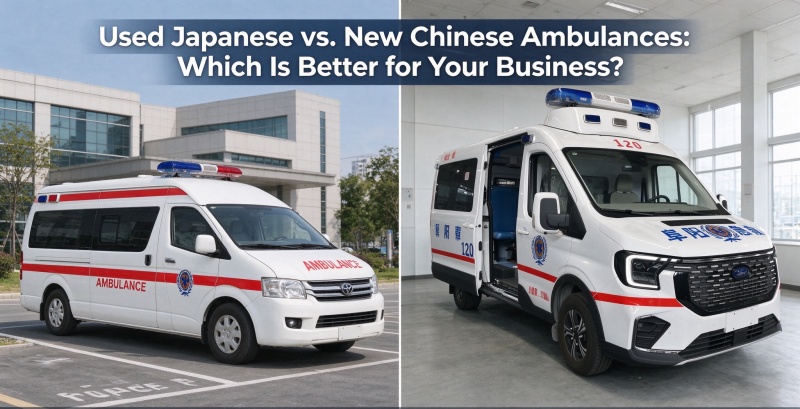
Table of Contents
Purchase Price vs. Total Ownership Cost
The first difference most buyers notice is the purchase price. Used Japanese ambulances, especially Toyota Hiace models, often have lower initial prices. However, the price you see at auction is only part of the total cost.
What Does a Used Ambulance Really Cost?
Before putting a used ambulance into service, you may need to pay for:
- Auction and agent fees
- International shipping from Japan
- Import duties and customs charges
- Mechanical inspection and necessary repairs
- Replacement tires, batteries, and other worn parts
- New medical equipment and interior fittings
A used vehicle may also have high mileage and years of previous operation. Its remaining engine, gearbox, and suspension life can be difficult to estimate.
A low purchase price does not necessarily mean a low total cost of ownership.
What About a New Chinese Ambulance?
A new ambulance usually requires a higher initial investment. However, it comes with a new chassis, new conversion components, and a configuration selected for your requirements.
Buyers can specify the medical equipment, vehicle layout, and chassis features before production, reducing the need for extensive modifications after delivery.
The real comparison is not simply the purchase price. It is the total cost of ownership (TCO) over the years you plan to operate the vehicle.
For hospitals and ambulance operators managing a fleet, unexpected repairs and vehicle downtime can be just as important as the initial investment.
Medical Equipment and Interior Configuration
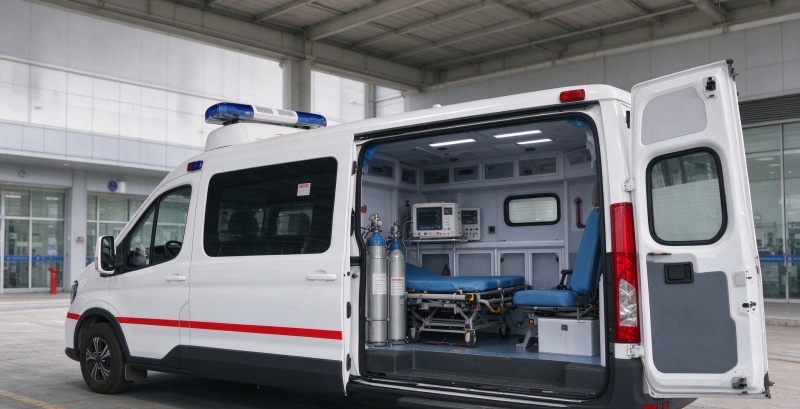
An ambulance is not just a van with a stretcher. Its medical equipment and interior layout determine what your medical team can do during patient transport.
Limitations of Used Ambulances
Many used Japanese ambulances are sold without their original medical equipment. Equipment that remains may be outdated, labelled in Japanese, or unsuitable for local medical requirements.
You may need to replace or upgrade:
- Patient stretchers and loading systems
- Oxygen supply systems
- Suction units
- Patient monitors
- Medical cabinets and storage
- Interior lighting and electrical systems
These additional costs can reduce the initial price advantage.
Some buyers also find that the existing medical cabin layout does not suit their operational needs. Modifying cabinets, electrical connections, or stretcher mounting positions may involve additional work.
Advantages of a New Custom-Built Ambulance
With a new ambulance from CLW, you can select the interior layout and medical equipment according to your requirements.
Available configurations include:
- Basic patient transfer: For routine patient transportation.
- BLS ambulance: For basic life support and emergency transport.
- ALS ambulance: For advanced monitoring and emergency medical care.
- ICU ambulance: For patients who require intensive monitoring during transportation.
- Negative pressure ambulance: For infectious patient transport.
The equipment and interior fittings are installed as part of the conversion process and checked before shipment.
The advantage is simple: you receive a vehicle designed around your medical team’s needs instead of adapting an older vehicle to fit them.
Steering Side and Chassis Selection
Steering configuration is an important consideration when importing an ambulance.
Japan drives on the left, so most used Japanese ambulances are right-hand drive (RHD). This works well in left-hand-traffic markets such as Kenya and Zambia, provided the vehicle meets local import and registration requirements.
However, RHD vehicles may not suit countries where traffic drives on the right, such as Ghana and Nigeria, where left-hand-drive vehicles are generally used.
Limitations of Used Japanese Ambulances
When buying at auction, you are generally limited to the vehicles available at that time. You may not be able to select:
- Left-hand drive or right-hand drive
- Engine type and power
- 4×2 or 4×4 drivetrain
- Wheelbase and body dimensions
- Vehicle model and production year
Converting an old vehicle from RHD to LHD, or the other way around, can be expensive and may not meet local regulations.
The available used vehicle must fit your market’s requirements, rather than the other way around.
More Choices with New Chinese Ambulance
CLW offers ambulance conversions based on different chassis brands, including:
- IVECO Daily
- JMC (Ford)
- Foton
- Other suitable chassis according to project requirements
Both LHD and RHD configurations are available, depending on the chassis model and factory production arrangements. 4×4 options are also available for rural areas and challenging road conditions.
You can select a chassis based on your road conditions, local parts availability, and maintenance network.
This flexibility is particularly important for buyers who need ambulances that can operate in remote areas or meet specific fleet procurement requirements.
Vehicle Condition and Reliability
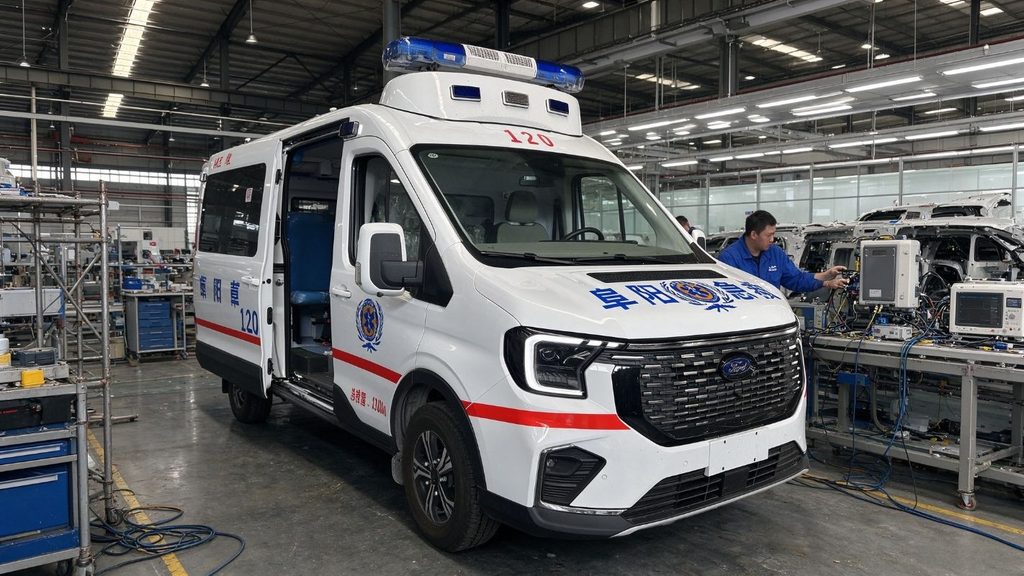
A used Japanese ambulance may look clean and well maintained, but its appearance does not always reflect its mechanical condition.
Emergency vehicles often spend long periods idling at hospitals, accident scenes, and emergency locations. This operating history can affect the engine and other components, even when the mileage appears reasonable.
What to Check Before Buying Used
Before purchasing a used ambulance, arrange a proper inspection of:
- Engine and gearbox condition
- Suspension and braking systems
- Chassis corrosion
- Electrical wiring
- Air conditioning
- Previous accident or repair history
Where possible, buyers should also review maintenance records and operating history.
A professional inspection can reduce the risk, but it cannot guarantee how long the vehicle will operate without problems.
Unexpected breakdowns may result in repair costs and ambulance downtime, especially where suitable replacement parts or experienced technicians are difficult to find.
Why Consider a New Ambulance?
A new ambulance gives you a clearer starting point. You know its production year, chassis configuration, and conversion specifications.
It also makes it easier to plan maintenance during the early years of operation.
For emergency services that depend on daily vehicle availability, reliability is worth considering alongside the purchase price.
A new vehicle does not eliminate maintenance requirements, but it reduces uncertainty related to previous use, hidden wear, and unknown repair history.
Warranty and Spare Parts Support
Warranty coverage and spare parts availability can directly affect your ambulance’s operating costs.
For overseas buyers, it is important to understand who supplies replacement parts, what is covered by the warranty, and how repairs will be handled after delivery.
Used Ambulances
Most used ambulances are sold without a comprehensive vehicle or conversion warranty. If a component fails after delivery, the buyer normally pays for inspection, repairs, and replacement parts.
Chassis parts for popular models such as the Toyota Hiace are widely available in many markets. However, specialized ambulance components can be more difficult to source.
These may include:
- Medical cabin panels and fittings
- Emergency warning lights
- Special electrical systems
- Control panels
- Oxygen supply fittings
- Custom storage cabinets
Check the availability and condition of replacement components before purchasing a used ambulance.
New CLW Ambulances
CLW provides after-sales support for new Chinese ambulances, covering both chassis-related coordination and ambulance conversion components.
- Chassis warranty: Provided according to the chassis manufacturer’s applicable warranty terms. Local service availability depends on the manufacturer’s authorized network and service policies.
- Ambulance conversion warranty: Coverage for eligible conversion components is subject to the warranty terms specified in the sales contract.
- Spare parts support: CLW can supply conversion-related replacement components from the factory.
- Technical assistance: CLW can provide technical guidance to help local workshops diagnose and repair conversion-related issues.
Before placing an order, buyers should confirm the applicable warranty period, covered components, exclusions, and spare parts arrangements in writing.
Clear warranty terms and reliable spare-parts support can make long-term maintenance more manageable, especially for ambulance fleets operating outside major cities.
Import Regulations and Customization
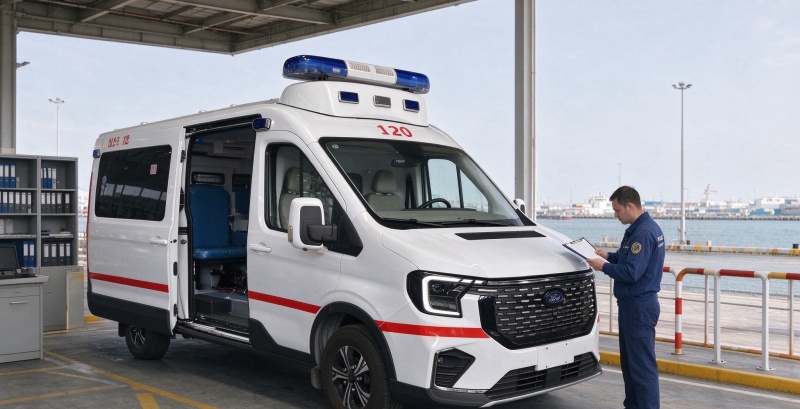
Import regulations can significantly affect the final cost of an ambulance.
Some countries restrict used vehicle imports based on vehicle age, while others apply different duty rates to used and new vehicles. Requirements also vary by country and may include vehicle inspection, homologation, or conformity documents.
What Should Buyers Check Before Importing?
Before buying, check:
- Whether used ambulances are permitted
- Maximum vehicle age, if applicable
- Import duties and taxes
- Vehicle registration requirements
- Emission standards
- Medical equipment regulations
A new vehicle may be easier to import in some markets, but it is not automatically exempt from certification or approval requirements.
Always confirm the destination country’s import and registration requirements before making a purchase decision.
This is particularly important for used Japanese ambulances, where vehicle age, steering configuration, and available documentation may limit import eligibility.
Customization: Used vs. New
With a used ambulance, customization is usually limited by the existing vehicle structure and equipment.
With a new Chinese ambulance, you can request:
- Interior layout and medical equipment
- Vehicle color and exterior painting
- Hospital or company logos
- Warning lights and sirens
- 4×4 drivetrain on suitable chassis
- Special electrical and oxygen systems
A new Chinese ambulance gives you more control over the final configuration before production begins.
For hospitals, emergency service providers, and distributors purchasing multiple units, this also makes it easier to maintain consistent specifications across a fleet.
When Is a Used Ambulance Still a Good Choice?
A used ambulance is not always the wrong choice. It can be a practical option under certain conditions.
Consider a used vehicle if:
- You have a very limited initial budget.
- You need a temporary replacement vehicle.
- Your country permits the import of older ambulances.
- You have an experienced workshop for inspection and repairs.
- The vehicle will mainly handle routine patient transfers rather than intensive emergency response.
In these situations, a well-maintained used Japanese ambulance may offer acceptable value, provided that its mechanical condition and medical equipment meet your operational requirements.
However, if your ambulance service depends on reliable daily operation, predictable maintenance costs, and customized medical equipment, a new vehicle may offer better long-term value.
The right decision depends on your budget, intended use, technical requirements, and the level of support available in your market.
Used Japanese vs. New Chinese Ambulances: Quick Comparison
| Comparison Factor | Used Japanese Ambulance | New Chinese Ambulance (CLW) |
|---|---|---|
| Initial purchase price | Usually lower | Usually higher |
| Vehicle condition | Depends on age and history | Brand-new chassis |
| Medical equipment | May be removed or outdated | New, customized equipment |
| Steering configuration | Mostly RHD | LHD or RHD, depending on model |
| Chassis selection | Limited to available used stock | IVECO, JMC, Foton, and others |
| 4×4 options | Depends on availability | Available on selected models |
| Chassis warranty | Usually unavailable from used sellers | Manufacturer warranty, subject to terms |
| Conversion warranty | Usually unavailable | Subject to agreed warranty coverage |
| Customization | Limited by existing structure | Layout, equipment, colors, and branding |
| Spare parts | Chassis parts may be widely available | Factory support for conversion parts |
| Maintenance planning | Depends on vehicle condition | More predictable initial service history |
The key difference is not simply used versus new. It is how much control, reliability, and long-term cost predictability you need from the vehicle.
Frequently Asked Questions
Is a used Japanese ambulance cheaper than a new Chinese ambulance?
Usually, yes, in terms of initial purchase price. However, shipping, import duties, repairs, and equipment replacement can increase the total cost. Compare the full cost over your expected operating period.
Can I import a used ambulance into my country?
It depends on your country’s import regulations. Some countries restrict used vehicles by age or apply higher import duties. Check the requirements before placing an order.
Do you manufacture right-hand-drive ambulances?
Yes. CLW can supply RHD ambulance configurations based on suitable factory-customized chassis. Availability depends on the selected model and production arrangements.
Can you build a 4×4 ambulance?
Yes. We offer 4×4 ambulance solutions for rural areas, difficult terrain, and locations where additional traction is necessary.
Can you build a negative pressure ambulance?
Yes. We can customize negative pressure ambulance interiors for infectious patient transport, according to the required technical specifications.
What is the minimum order quantity?
The minimum order quantity is one unit. Hospitals, clinics, private ambulance operators, and distributors can all discuss single-unit orders.
What’s Next? Choose the Ambulance That Fits Your Operation
When comparing used Japanese vs. new Chinese ambulances, the best choice depends on more than the initial price.
Consider your country’s import regulations, road conditions, medical requirements, spare parts availability, and expected operating years.
A used Japanese ambulance may suit buyers with a limited budget or a temporary need, especially where local maintenance support is available.
A new Chinese ambulance offers greater control over chassis selection, medical equipment, interior layout, and customization, along with a clearer starting point for maintenance planning.
For hospitals, emergency service operators, and distributors looking for a reliable long-term solution, choosing the right specifications is just as important as choosing the right supplier.
Looking for a new ambulance for your hospital, clinic, or emergency service?
Contact CLW today and tell us your destination country, required ambulance type, steering configuration, purchase quantity, and budget.
Our team can recommend a suitable chassis, prepare a customized configuration, and provide a factory-direct quotation for your project.
