

Waste management trucks for Africa are essential for cities and towns that want cleaner streets, more efficient collection, and lower long-term operating costs. From high-capacity garbage compactors to compact three-wheelers, water sprinklers, and hooklift systems, the right vehicle can make a major difference in daily operations.
This practical guide from CLW Group compares 3 common types of sanitation trucks used across Africa. It also explains how to choose the right specifications, match vehicles to local road conditions, and handle import requirements.
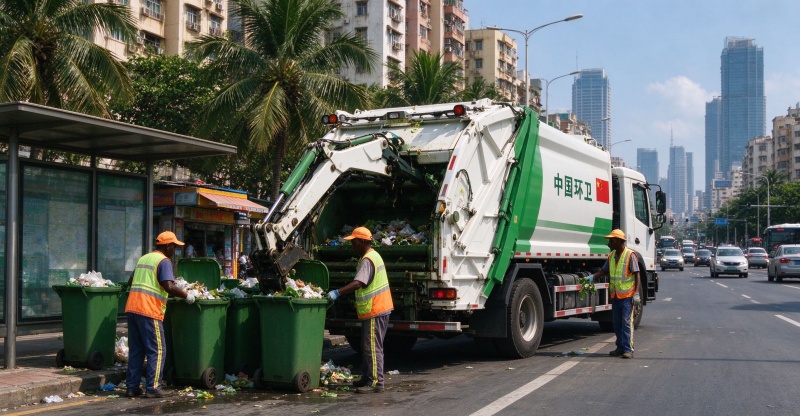
Table of Contents
3 Practical Types of Waste Management Trucks for Africa
1. Garbage Compactor Trucks – The Workhorse of Municipal Collection
Compactor trucks remain the backbone of most municipal fleets. They compress waste on the go, increasing collection efficiency and reducing the number of trips to the disposal site.
Recommended capacity guide:
| Capacity | Typical Application |
|---|---|
| 6–8 CBM | Small towns and residential communities |
| 10–12 CBM | Medium-sized municipal routes |
| 14–16 CBM | High-volume urban collection |
| 18–20 CBM | Large-scale municipal operations |
Important note: Always calculate actual payload based on chassis GVW, body weight, expected waste density, and local axle-load limits. A larger container does not automatically mean higher legal carrying capacity.
2. Three-Wheel Garbage Collection Vehicles – Ideal for Narrow Streets
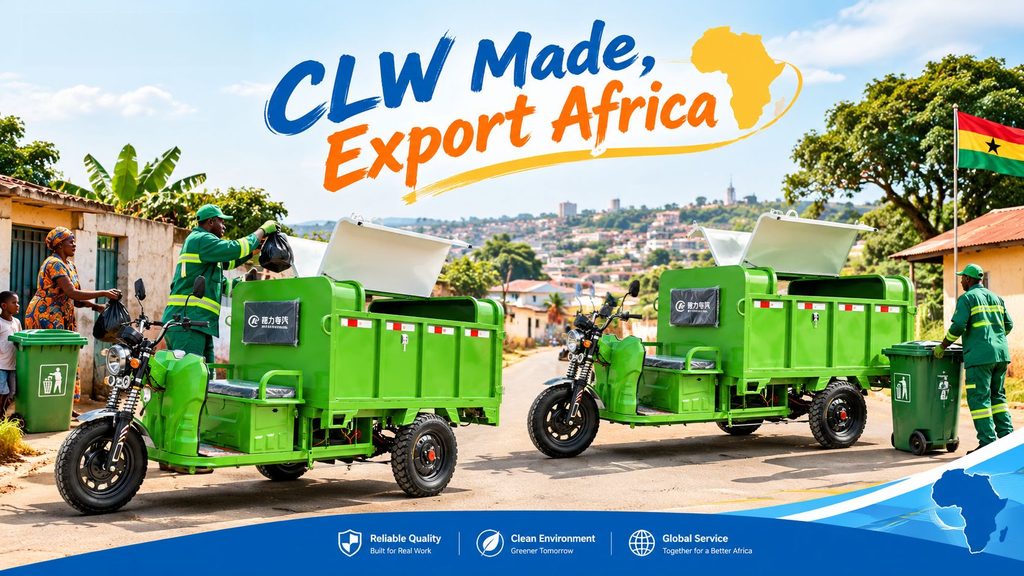
In dense residential areas, markets, villages, and narrow alleys, large trucks often cannot enter. Three-wheel collection vehicles offer a flexible and lower-cost solution.
Key advantages:
- Compact size and excellent maneuverability
- Lower purchase price
- Easy access to restricted areas
- Suitable for short-distance collection
- Reduced need for large trucks to enter residential zones
Available options usually include enclosed bodies, hydraulic tipping systems, and both diesel and electric versions. Enclosed bodies are strongly recommended for better hygiene.
Caution: Confirm local registration and road-use regulations before ordering. Some countries restrict three-wheel vehicles on public roads.
3. Hooklift & Skip Loader Trucks – Flexible Container Handling
Hooklift and skip loader trucks allow operators to collect, transport, and exchange waste containers using hydraulic systems. One truck can serve multiple containers.
They are particularly useful for:
- Municipal transfer stations
- Construction and commercial waste
- Industrial sites
- Large residential compounds
- Centralized container systems
This flexibility often improves collection scheduling and reduces the number of specialized vehicles needed.
Key Markets and Product Focus Across Africa
Demand exists across the continent, but preferred configurations differ by country:
| Country | Strong Product Focus | Key Considerations |
|---|---|---|
| Zimbabwe | Compactor trucks, vacuum trucks | RHD, maintenance access |
| Zambia | Medium-duty refuse trucks | RHD, municipal collection needs |
| Botswana | Compactors, water sprinkler trucks | RHD, durability, local support |
| Ghana | Enclosed collection vehicles, compactors | Urban collection & compliance |
| Tanzania | Municipal compactors, water tankers | Fleet procurement & import rules |
| Senegal | Collection and transfer vehicles | Municipal projects & distribution |
| Angola | Large compactors, sprinkler trucks | LHD, Portuguese technical support |
These are practical market directions, not import rankings. Always match the vehicle to local collection systems, roads, and service networks.
How to Choose the Waste Management Trucks for African Conditions?
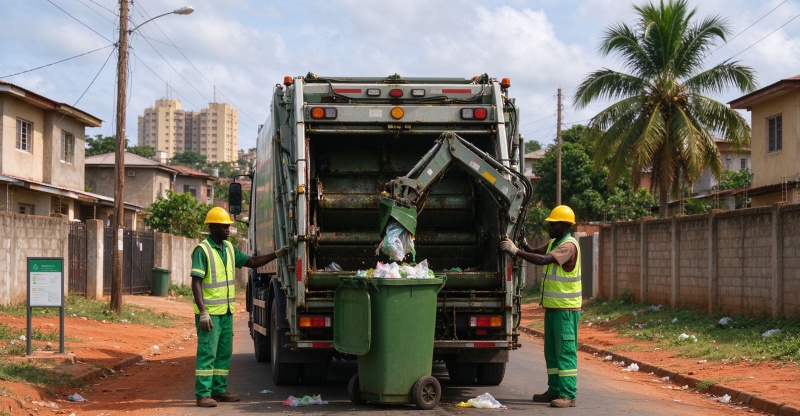
Consider these five factors carefully before placing an order:
1. Left-Hand Drive or Right-Hand Drive
Match local traffic rules:
- RHD: Zimbabwe, Zambia, Botswana, Tanzania, Kenya, etc.
- LHD: Ghana, Senegal, Angola, Nigeria, etc.
2. Chassis and Engine
Popular reliable options for customized sanitation trucks include Dongfeng, FOTON, SHACMAN, FAW, SINOTRUK HOWO, and JAC. Choose engines based on local fuel quality, emission rules, spare-parts availability, and operating conditions.
3. Capacity vs. Actual Payload
Confirm:
- Gross Vehicle Weight (GVW)
- Chassis curb weight
- Body weight
- Legal payload
- Expected waste density
- Axle load limits
Overloading shortens vehicle life and increases maintenance costs.
4. Maintenance and Spare Parts
Ask suppliers about:
- Chassis and hydraulic system documentation
- Recommended spare parts lists
- Operator training
- Warranty terms
- Remote technical support
A lower purchase price loses value if parts are hard to obtain.
5. Diesel or Electric?
Electric vehicles can work well on short, predictable urban routes with charging infrastructure. Diesel remains more practical for long distances, remote areas, and locations with limited charging facilities. Evaluate total cost of ownership, not just purchase price.
Import Documentation for African Markets
Requirements vary by country. Typical documents include:
- Commercial Invoice
- Packing List
- Bill of Lading
- Certificate of Origin
- Vehicle technical specifications
- Chassis identification documents
- Certificate of Conformity (CoC) where required
- Pre-shipment verification (PVoC) where applicable
- Local type approval or registration documents
Always verify exact requirements with your local customs authority, standards agency, or licensed importer before confirming production — especially for customized trucks and three-wheel vehicles.
Why Work with a Chinese Manufacturer?
Chinese manufacturers offer a wide range of sanitation equipment at different budget levels, with strong customization capability. CLW Group supplies:
- Garbage compactors
- Hooklift and skip loader trucks
- Sewage suction and sewer cleaning vehicles
- Compact three-wheel collection vehicles
Options include LHD/RHD, diesel/electric, and various capacities. Matching chassis, body, and local operating conditions produces more practical and cost-effective solutions.
Final Recommendations
Successful procurement focuses on long-term performance rather than the lowest initial price. Prioritize:
- Correct capacity and payload
- Road and climate suitability
- Maintenance convenience
- Spare parts availability
- Compliance with local import and registration rules
Working with an experienced manufacturer helps you specify the right configuration and prepare the necessary technical documentation from the start.
Looking for Waste Management Trucks for Your Country?
Tell us your destination country, preferred vehicle type, capacity, quantity, and chassis preference. CLW Group can prepare a suitable configuration and export quotation for municipalities, waste management companies, and distributors.
Contact CLW Group – Your sanitation truck manufacturing partner in China.
Frequently Asked Questions
How much does a garbage compactor truck cost in China?
Prices vary by chassis, engine, capacity, hydraulic equipment, and customization. Request quotes on identical specs and delivery terms for accurate comparison.
Can Chinese manufacturers supply right-hand drive sanitation trucks?
Yes. Selected Chinese chassis support RHD, subject to model availability and destination-country rules.
Are three-wheel garbage collection vehicles suitable for African cities?
Yes, for short-distance collection in narrow streets and communities. Confirm local registration rules, payload, stability, and waste containment requirements first.
What documents are needed to import a sanitation truck into Africa?
Varies by country. Typically, a commercial invoice, packing list, Bill of Lading, Certificate of Origin, and technical specs; CoC, PVoC, or type approval where applicable. Confirm with local customs or an import agent before production.
