

Urban waste collection involves frequent stops, repeated bin handling, and regular trips between collection points and disposal facilities. A Pure Electric Sealed Bin Garbage Truck combines battery-powered operation with an enclosed garbage body and a hydraulic bin loading system. It is designed for waste collection routes where vehicle size, operating noise, and daily driving distance are important considerations.
Understanding how this vehicle works and what affects its performance can help municipalities, waste management companies, and commercial operators choose a suitable configuration.
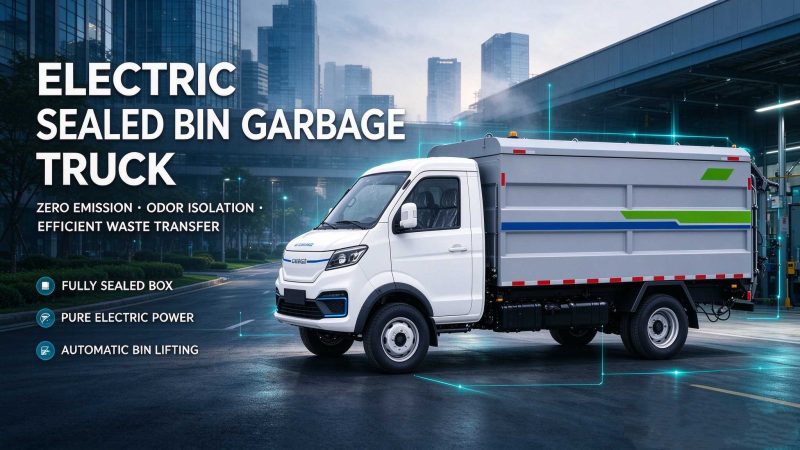
Table of Contents
What Is a Pure Electric Sealed Bin Garbage Truck?
A Pure Electric Sealed Bin Garbage Truck uses an electric drivetrain rather than a conventional diesel engine. Its enclosed body helps contain waste during transportation, while a hydraulic loading mechanism lifts and unloads compatible garbage bins.
Unlike diesel-powered vehicles, battery-electric trucks produce no tailpipe emissions during operation. They can also produce less powertrain noise, although overall noise levels depend on the vehicle, loading equipment, and working environment.
This vehicle type is generally considered for routine waste collection in residential communities, commercial districts, and urban neighborhoods.
Key Features of a Pure Electric Sealed Bin Garbage Truck
1. Battery-Electric Power System
Battery capacity and driving range are important when planning daily collection routes. Some compact electric garbage trucks are equipped with a 70.47 kWh battery and advertise a driving range of up to 340 km. These figures are model-specific examples, not standard specifications for every electric garbage truck.
Actual range can vary with payload, ambient temperature, road conditions, driving style, traffic, and auxiliary equipment use.
For example, a vehicle making frequent stops in a densely populated area may consume energy differently from one traveling longer distances between collection points. Buyers should assess the expected working cycle rather than relying on the advertised range alone.
2. Hydraulic Bin Loading System
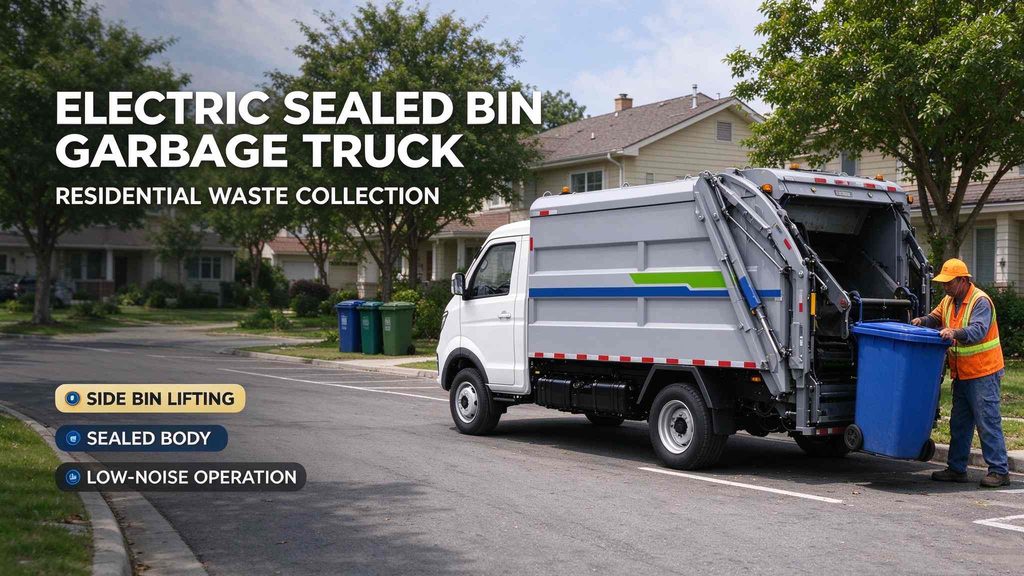
A hydraulic bin loading system lifts, turns, and unloads compatible garbage bins, helping reduce repetitive manual handling.
Before selecting a vehicle, check the dimensions, lifting points, and loaded weight of the bins used in your collection area. The loading mechanism must match these requirements to operate safely and efficiently.
3. Sealed Garbage Body
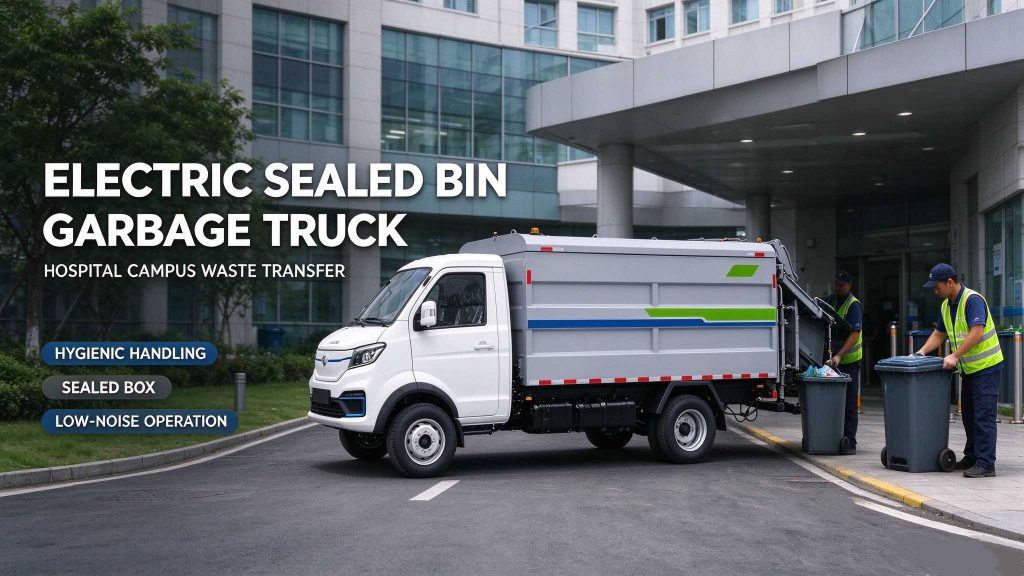
An enclosed garbage body helps prevent rubbish from falling onto the road during transportation. It can also help contain waste and limit the escape of unpleasant odors when the body and its seals are properly maintained.
This is particularly relevant to residential streets, commercial areas, and locations where scattered waste can create additional cleaning work.
A sealed body does not eliminate every risk of leakage or odor. Its performance depends on the body design, sealing condition, waste characteristics, and operating practices.
4. Reduced Powertrain Noise
Electric drivetrains generally produce less powertrain noise than comparable internal combustion engines. This may be useful for collection routes near homes, schools, hospitals, and office buildings.
However, hydraulic equipment, bin handling, tires, and road surfaces also generate noise. Operators should consider the entire collection process when assessing noise-sensitive applications.
Common Applications in Urban Waste Collection
1. Residential Communities
Residential collection often involves short distances between bins, frequent stops, and narrow internal roads. A suitable electric garbage truck can support scheduled collection from shared waste points, provided its dimensions and loading system match the site requirements.
2. Commercial Districts
Shops, restaurants, and office buildings generate waste throughout the day. Collection schedules may need to avoid peak pedestrian and traffic periods. Lower powertrain noise can be an advantage, but route planning and safe bin handling remain essential.
3. Municipal Street Collection
Municipal operators may use electric waste collection vehicles on designated urban routes. Before deployment, they should check road access, collection volume, payload limits, charging access, and the location of waste disposal facilities.
4. Noise-Sensitive Areas
Early-morning or evening collection may take place near residential buildings and public facilities. Electric operation can reduce powertrain noise, but it does not make a vehicle silent. Collection times and loading procedures should still follow local noise regulations.
How to Choose the Right Electric Garbage Truck?
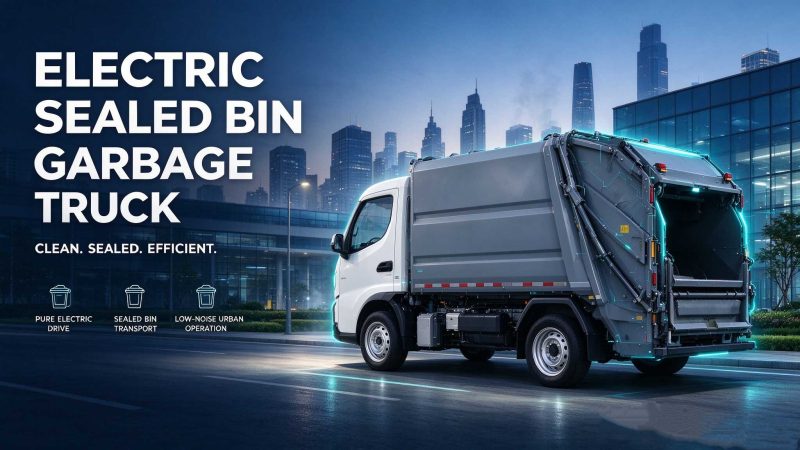
The right configuration depends on the actual working conditions. Consider the following factors before purchasing.
1. Daily Mileage and Driving Range
Calculate the total distance traveled per shift, including travel to the depot, collection stops, disposal facilities, and return journeys.
As an initial planning approach, consider allowing approximately 20–30% range margin above the expected daily distance. This is a practical starting point rather than a universal rule. The appropriate reserve depends on temperature, payload, traffic, route changes, battery aging, and access to charging.
2. Payload and Waste Volume
Estimate the amount and type of waste collected each day. Check the vehicle’s rated payload and gross vehicle weight, and account for the weight of the crew and any additional equipment where applicable.
Do not select a vehicle based on body dimensions alone. The usable payload must also meet the requirements of the collection operation and comply with local road regulations.
3. Battery and Charging Facilities
Confirm the battery capacity, charging interface, charging time, and available power supply. Consider whether the vehicle can recharge overnight or during scheduled breaks.
For fleet operations, charging arrangements should match the number of vehicles, daily mileage, and shift schedules.
4. Bin Compatibility and Road Access
Provide the supplier with garbage bin dimensions, lifting arrangements, and loaded weight. Also check the vehicle’s overall dimensions against narrow streets, parking areas, height restrictions, and access roads.
5. Climate and Operating Conditions
High or low temperatures can affect battery performance. Steep roads, heavy traffic, frequent acceleration, and high payloads can also increase energy consumption.
For markets with demanding climates or challenging road conditions, discuss the expected working environment with the supplier and confirm that the proposed configuration is appropriate.
6. Maintenance and Import Requirements
Compare the initial vehicle cost with electricity, routine maintenance, charging infrastructure, and battery warranty arrangements. Actual operating savings depend on local energy prices, annual mileage, and vehicle utilization.
For export purchases, check the destination country’s registration, homologation, technical documentation, and electric vehicle requirements before confirming the order.
Conclusion
A Pure Electric Sealed Bin Garbage Truck can support urban waste collection where the vehicle’s range, payload, bin loading system, and charging arrangements match the daily workload. Evaluating real operating conditions is essential to choosing a suitable vehicle and avoiding unnecessary operating limitations.
If you are considering this type of vehicle for your market, explore our Pure Electric Sealed Bin Garbage Truck for more product details. Contact us to discuss your application, confirm technical requirements, and request an export quotation.
Frequently Asked Questions
What is the driving range of a Pure electric sealed bin garbage truck?
The range varies by model and operating conditions. Some vehicles advertise up to 340 km, but actual distance depends on battery capacity, payload, temperature, route profile, and driving patterns.
Can it handle existing garbage bins?
It may be possible if the bins match the loading system. Confirm their dimensions, lifting points, and loaded weight before ordering.
Are electric garbage trucks suitable for residential areas?
They can be suitable for residential collection routes when their payload, range, and loading system meet operational requirements. Lower powertrain noise and zero tailpipe emissions during operation may also be beneficial in residential environments.
Is it suitable for residential waste collection?
It can be suitable when the payload, driving range, vehicle dimensions, and loading mechanism meet the needs of the route. Local noise rules and charging access should also be considered.
